The Lantern, the Golden Ball, and the Lightning
Sixteen grueling years later, the impossible was done.
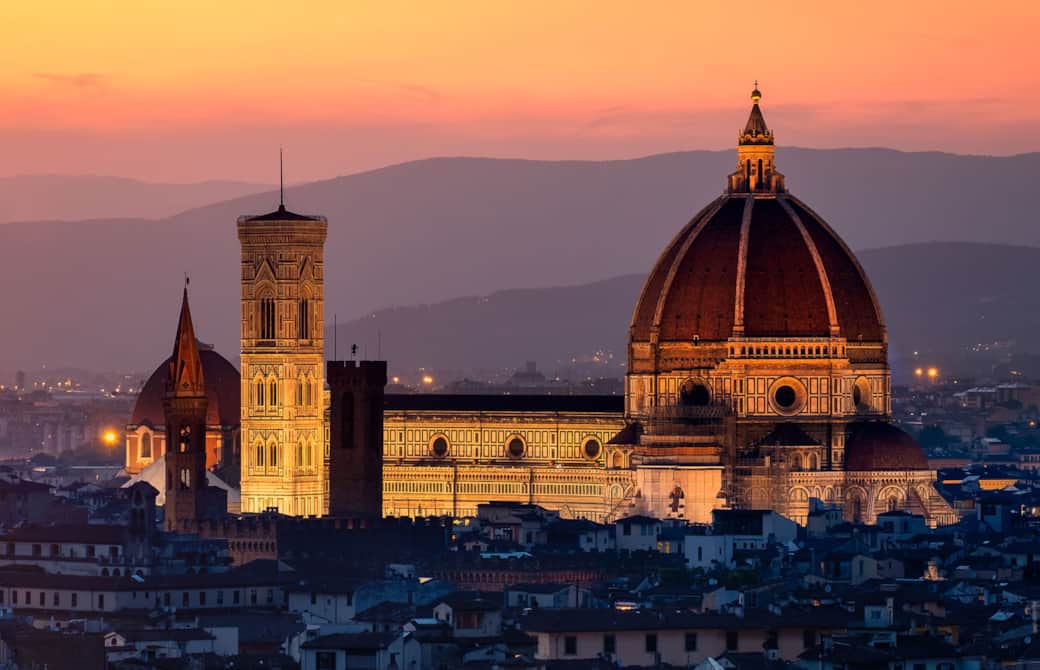
In 1436, Pope Eugenius IV traveled to Florence to officially consecrate the finished cathedral. Brunelleschi’s dome, weighing an estimated 37,000 tons and containing over 4 million individual bricks, was finally closed.
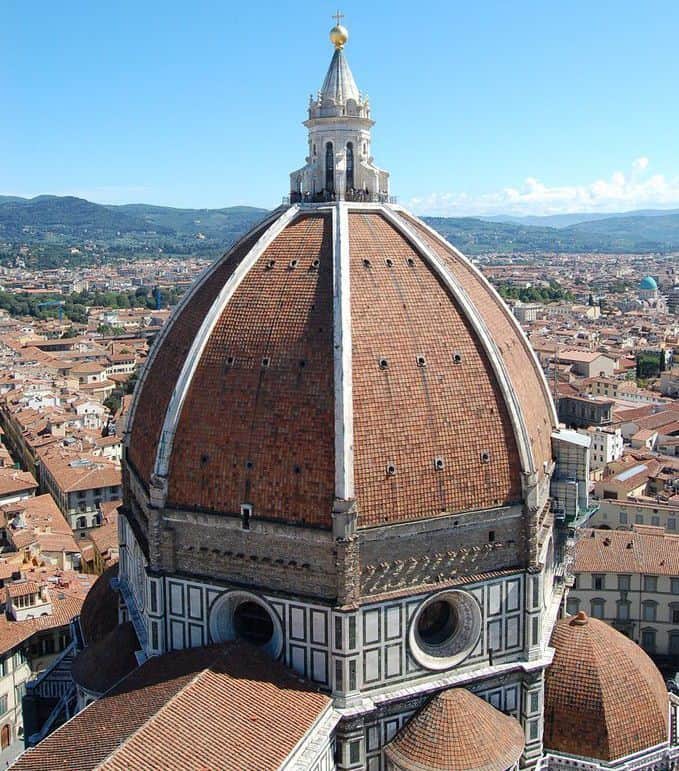
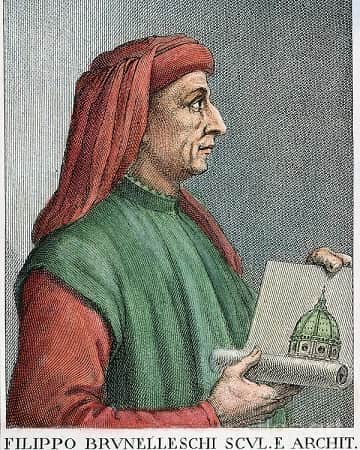
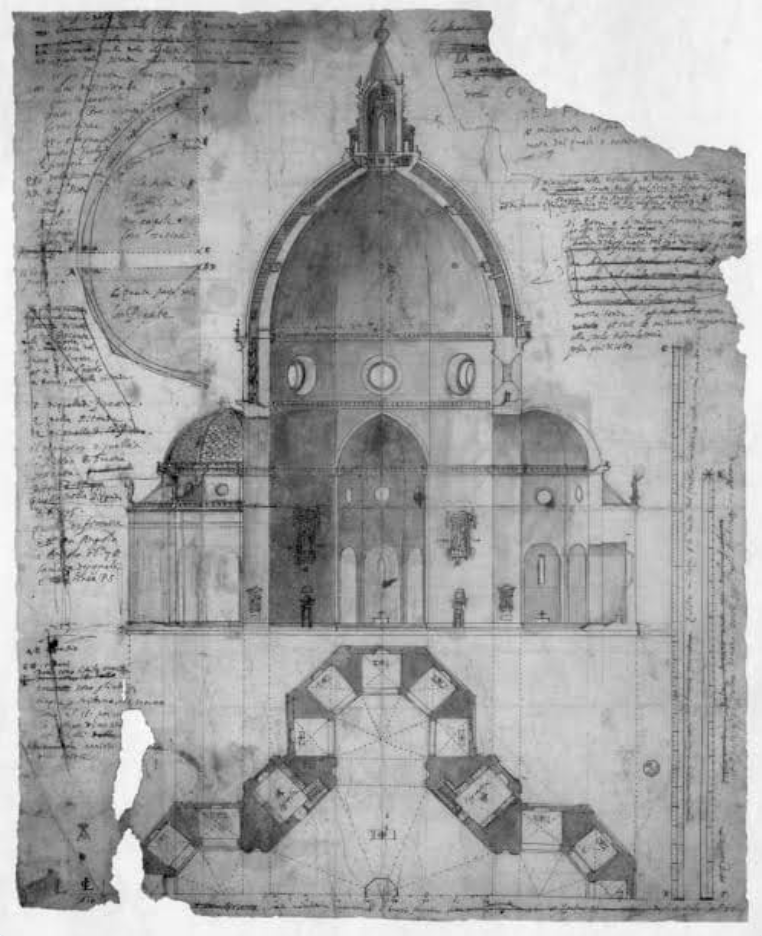
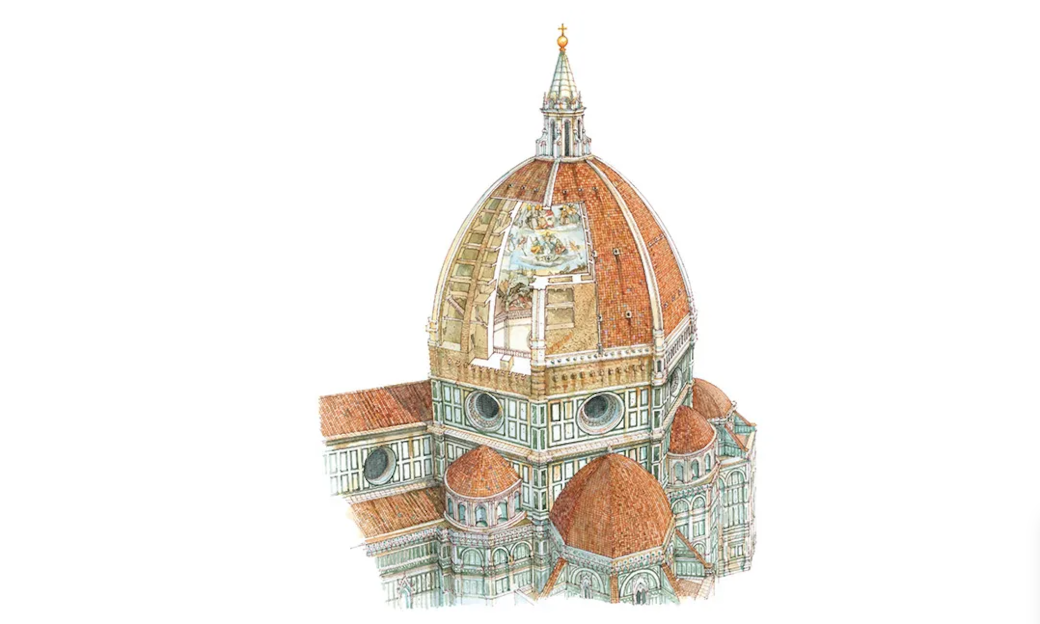
But the cathedral wasn't quite finished. It still needed the lantern, the heavy marble structure at the very peak that covers the central opening (the oculus). The committee, incredibly, forced Brunelleschi to compete in another contest to design it. Naturally, he won again.
The lantern is not just decorative; its immense weight actually pushes down on the massive ribs of the dome, locking the entire structure into place. Unfortunately, Brunelleschi died in 1446, mere weeks after the first stone of the lantern was laid. He was buried in the crypt of the cathedral, a massive honor in an era when architects were generally treated as mere tradesmen.
The final touch was added decades later in 1471. The guild commissioned a massive, gilded copper sphere to sit at the absolute pinnacle of the lantern. It was hoisted into place by an engineering team led by the sculptor Andrea del Verrocchio. Working on Verrocchio’s crew at the time was his young apprentice, Leonardo da Vinci, who would never forget the thrill of the monumental mechanics.
Because it sits so high above the Arno valley, the golden ball acts as a natural lightning rod. In 1600, a massive lightning strike blew the ball completely off the lantern. It crashed hundreds of feet down into the piazza below with a deafening roar. A small white marble circle embedded in the cobblestones behind the cathedral still marks the exact spot where it violently struck the earth.