Logo

Welcome to The Florence Royal Suite Collection

Your Luxury Cozy Nest In The Very Heart Of Renaissance

The Florence Royal Suite

Following Dante’s Footsteps in Florence: A Walking Tour Through Exile and Hell

Most travelers arrive in the Tuscan capital looking for the Renaissance. They want the polished marble of Michelangelo, the golden symmetry of Brunelleschi, and the soft, mythological grace of Botticelli.

Forget all of that for a moment.

We are going hunting for ghosts in an older, darker, and vastly more dangerous version of the city. Before the Medicis turned Florence into an immaculate gallery of humanism, it was a medieval warzone. It was a claustrophobic maze of towering stone fortresses, narrow, sunless alleys, and vicious political gang wars. Blood ran in the streets. Neighbors routinely assassinated neighbors.

This was the Florence of Dante Alighieri.

The Supreme Poet, the father of the modern Italian language, and the author of the Divine Comedy wasn't just a romantic sitting at a desk writing verses. He was a fierce politician, a cavalryman, and ultimately, a heartbroken exile. Florence didn't just reject Dante; the city government threatened to burn him alive at the stake if he ever dared to cross its borders again. He spent the last two decades of his life wandering Italy, harboring a massive, cosmic grudge, and writing his political enemies into the literal pits of Hell.

Tracing his footsteps today requires peeling back the Renaissance veneer. You have to look at the cracks in the pavement, the shadowed archways, and the quiet, unassuming corners.

Here is how to track down the ghost of Dante Alighieri in Florence.

1. The Starting Point: "Il Mio Bel San Giovanni"

Begin your wal

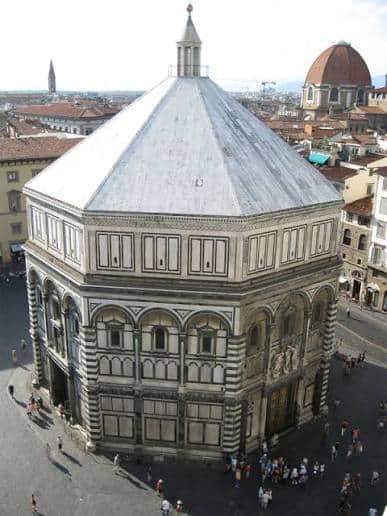
k at the geographic and spiritual center of the city: Piazza del Duomo. But ignore the massive cathedral for now. Turn your attention to the smaller, octagonal building sitting right in front of it, the Baptistery of San Giovanni.

This is one of the oldest buildings in the city, dating back to the 11th century. On Holy Saturday in the year 1266, a baby named Durante (later shortened to Dante) was brought here to be baptized.

Dante deeply loved this building. Long after he was exiled, shivering in the damp courts of northern Italy, he wrote about it with aching nostalgia, calling it il mio bel San Giovanni (my beautiful St. John).

Walk inside. Do not just look at the geometric floor; look straight up. The ceiling is completely covered in a terrifying, glittering, golden Byzantine mosaic of the Last Judgment. You will see a massive, multi-headed, horned Satan actively chewing on the souls of the damned.

Sound familiar?

Historians are almost entirely certain that a young Dante stared up at this exact ceiling, and the monstrous, freezing, three-headed Lucifer he later described in the deepest depths of his Inferno was directly inspired by the nightmares this mosaic gave him as a child.

2. The Memory Test: Sasso di Dante (Dante’s Stone)

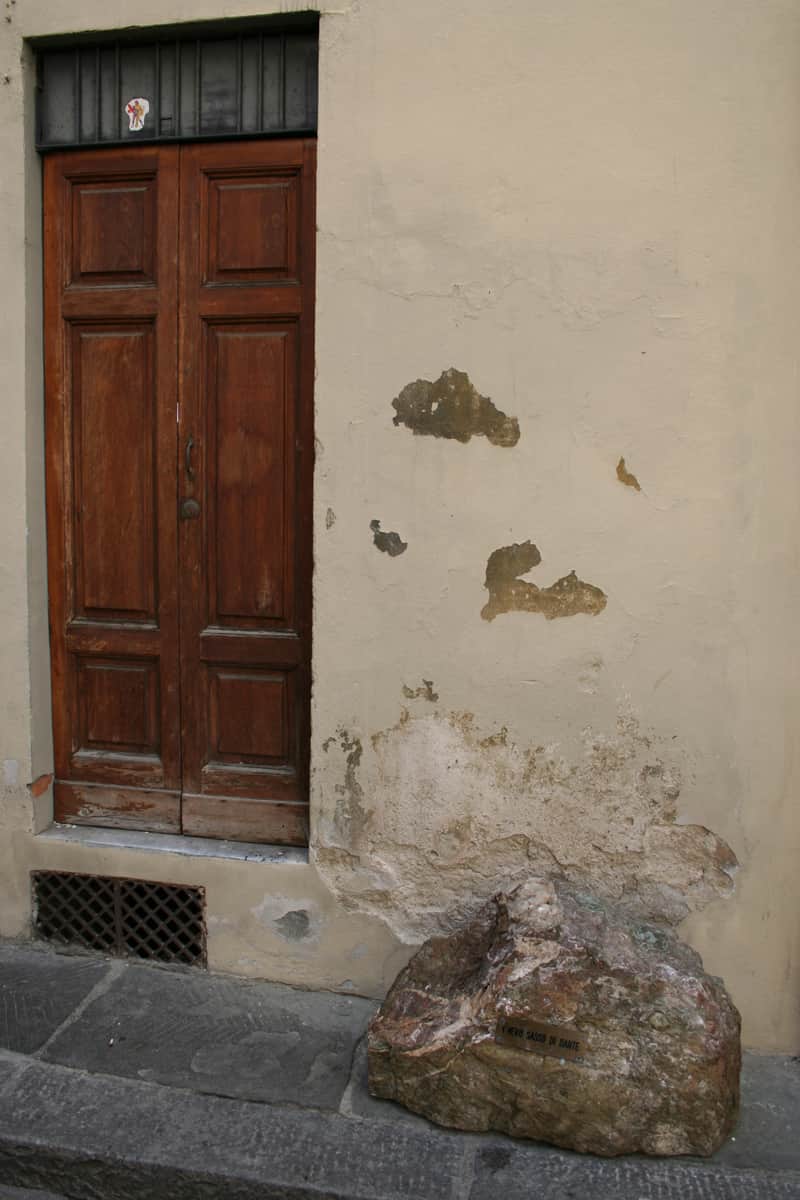
Exit the Baptistery and walk around to the south side of the massive cathedral, right near the corner of Via dello Studio. Keep your eyes on the ground and the lower walls of the surrounding buildings. You are looking for a small, easily missed plaque that reads "Sasso di Dante".

Legend has it that before his exile, Dante would sit on a large stone right here in the piazza, watching the early excavation work for the new cathedral.

He was known for having a terrifyingly sharp, almost photographic memory. The local folklore tells a story of a stranger walking up to Dante while he was sitting on this rock. The man randomly asked, "Oh Dante, what is the best thing to eat?"

Dante didn't look up. "An egg," he replied.

The stranger walked away. Exactly one year later, the same man returned, found Dante sitting on the exact same stone, and sneakily tried to test him. "With what?" the stranger asked, providing no context.

Without missing a beat, Dante replied, "With salt."

Is the story true? Probably not. It’s a piece of urban mythology. But the stone marks the exact spot where the poet would have sat, absorbed in his thoughts, watching his beloved city begin a massive architectural project he would never live to see finished.

3. The Gritty Reality of the Dante District

Leave the open space of the Duomo and plunge south into the labyrinth of narrow streets toward Via Santa Margherita.

Suddenly, the sunlight vanishes. The streets here are hemmed in by heavy, medieval stone towers. This is the authentic heart of Dante’s Florence. During his lifetime, the city was violently split into two warring factions: the Guelphs (who backed the Pope) and the Ghibellines (who backed the Holy Roman Emperor). Later, Dante's own Guelph party split into Black and White factions, leading to even more street brawls, arson, and murder.

Right in the middle of this dark, claustrophobic grid is the Museo Casa di Dante (Dante’s House Museum).

Here is some brutal historical candor. Is this the actual house he lived in? Absolutely not.

The original Alighieri family homes were destroyed centuries ago. The current brick building is a 20th-century reconstruction, essentially built as a tourist attraction. However, the location is historically accurate. This is the exact neighborhood where his family lived. While you can skip the museum itself if you are tight on time, wandering these specific alleys, looking up at the Torre della Castagna (Chestnut Tower) where Dante served as a city prior, gives you the genuine, claustrophobic feel of the medieval city he navigated.

4. The Church of Unrequited Obsession

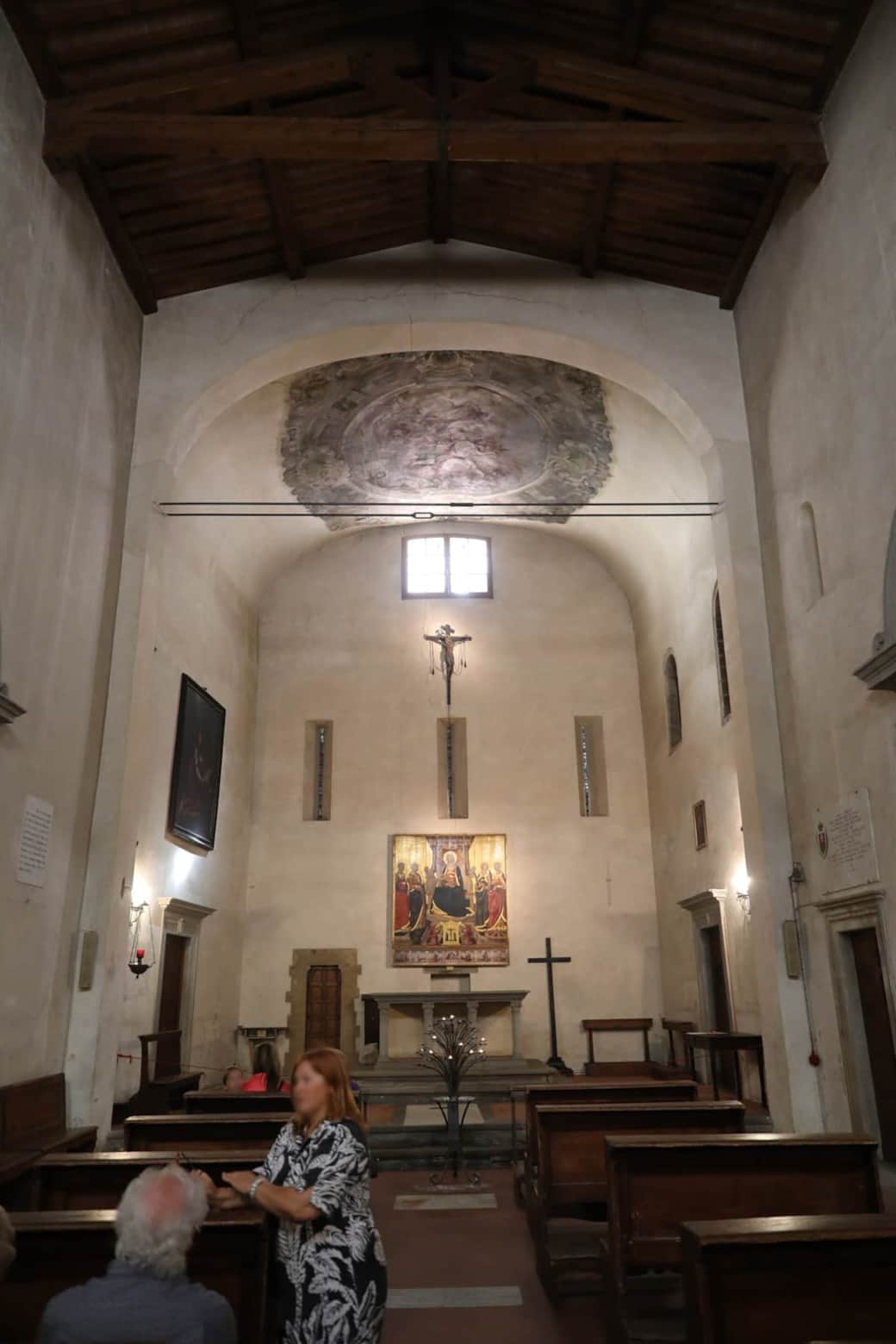
Just around the corner from the museum, tucked away in a narrow alley, is a tiny, incredibly plain stone church. If you aren't looking for it, you will walk right past it.

This is the Church of Santa Margherita dei Cerchi. Locals simply call it "Dante’s Church."

Walk inside. It is incredibly intimate, dimly lit, and usually silent. This small room is the epicenter of the greatest, most tragic, unconsummated love story in European literature.

When Dante was just nine years old, he attended a May Day party. There, he laid eyes on a girl named Beatrice Portinari. He was instantly, violently struck by lightning. He became obsessed with her. She became his muse, his angelic ideal, and the guiding light of his entire literary career. She is the woman who physically guides him through Heaven in the Paradiso.

They rarely spoke. They both married other people. Beatrice’s family attended this specific church, and it is widely believed that Dante would stand in the shadows here, just hoping to catch a fleeting glimpse of her during mass.

Beatrice died tragically young, at the age of twenty-four, devastating Dante.

Inside the church, you will find a small shrine dedicated to her. Next to her tombstone sits a woven wicker basket. Look inside. It is constantly overflowing with handwritten letters, folded notes, and scraps of paper left by tourists and locals alike. People suffering from broken hearts or unrequited love write to Beatrice, asking the ultimate literary muse for help with their own tragic romances. It’s a bizarre, beautiful, deeply human tradition.

5. The Seat of Power and the Death Mask

Head south until the alleys open up violently into Piazza della Signoria, the political nucleus of Florence. Towering over the square is the fortress-like Palazzo Vecchio.

This building represents Dante’s ultimate downfall.

In 1300, Dante was elected as one of the Priors of Florence, essentially the highest executive office in the city. He governed from this very building. But politics in medieval Florence was a lethal game. While Dante was out of the city on a diplomatic mission to Rome, his political enemies (the Black Guelphs) staged a bloody coup, aided by the Pope.

They immediately condemned Dante to permanent exile. The charges were completely fabricated: corruption, financial fraud, and opposing the Pope. The sentence was absolute. If he returned, he would be burned at the stake. He never saw his wife, his children, or his city ever again.

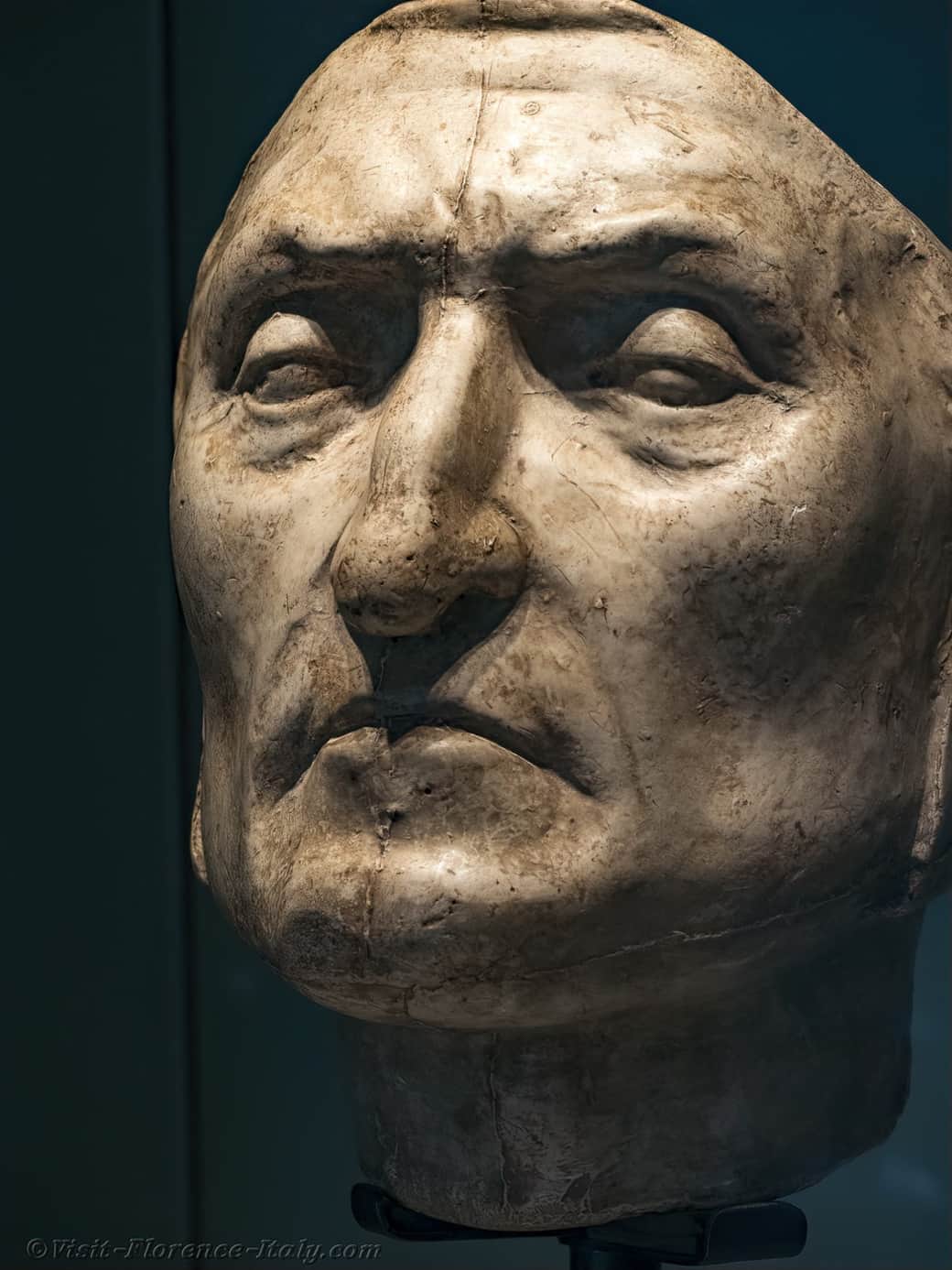
If you buy a ticket to go inside the Palazzo Vecchio, walk up the grand staircases and navigate the labyrinth of state rooms. In a small hallway, enclosed in a glass display case, sits a startling, hollow-eyed face.

This is the Dante Death Mask.

Pop culture fans will recognize this immediately from Dan Brown’s thriller Inferno. The grim reality is that modern historians highly doubt this mask was actually cast directly from Dante's dead face in 1321. It was likely sculpted much later, perhaps in the 1400s, based on a lost original or simply carved to match his famously ugly, hooked-nose profile.

Regardless of its forensic authenticity, staring into the hollow, downturned eyes of the mask inside the very building that ruined his life is a deeply chilling experience.

6. The Final Insult: The Empty Tomb at Santa Croce

To finish your walking tour, head a few blocks east toward the sprawling Piazza di Santa Croce.

The Basilica of Santa Croce is the Westminster Abbey of Italy. It is the final resting place for the titans of the Renaissance. Michelangelo is buried here. Galileo is buried here. Machiavelli is buried here.

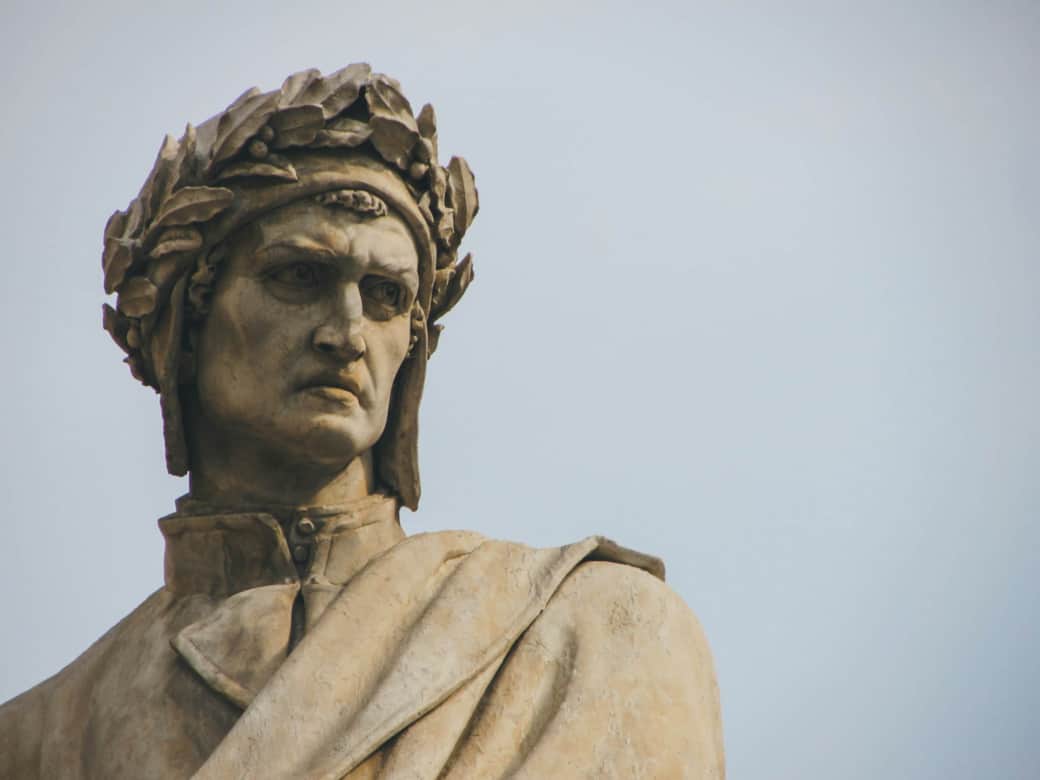
Walk through the massive, echoing nave. Along the right-hand wall, you will find a colossal, incredibly dramatic marble monument dedicated to Dante Alighieri. He is depicted sitting high above, looking fiercely depressed, while marble figures representing Poetry weep at his feet.

It is grand. It is majestic. And it is completely, entirely empty.

When Dante died in 1321, he was living in the humid, mosquito-ridden city of Ravenna, on the Adriatic coast. He had spent 19 years as a wandering beggar and a court guest, furiously writing his masterpiece. Ravenna buried him with high honors.

Decades later, Florence realized they had made a colossal, embarrassing mistake. The man they threatened to burn alive was now considered the greatest genius of the era. The Divine Comedy was an absolute sensation. The Florentine government formally requested that Ravenna return his bones so he could be buried in his hometown.

Ravenna’s response was, essentially, "Absolutely not. You threw him out. We kept him safe. He stays here."

Florence kept asking. In the 1500s, Pope Leo X (who was a Florentine Medici) actually sent an armed delegation to Ravenna to forcefully take the bones. When the Florentine guards opened the sarcophagus in Ravenna, they found it totally empty. The Franciscan monks in Ravenna had caught wind of the plot, tunneled through the wall in the middle of the night, stolen Dante’s skeleton, and hidden it under the floorboards to protect him from his former countrymen.

The bones stayed in Ravenna.

So, Florence built this massive, empty cenotaph in Santa Croce as a perpetual apology. Underneath the statue, a Latin inscription reads: Onorate l'altissimo poeta (Honor the most exalted poet). It is a direct quote from the Inferno.

Essential Tips for the Dante Trail

If you are going to hunt for the Supreme Poet, keep these practical points in mind:

  • Look Up for the Plaques: In the early 1900s, the city of Florence installed 33 stone plaques on various buildings across the historic center. Each plaque contains a three-line stanza (terzina) from the Divine Comedy, placed specifically in the location that the quote references. It is literally a city-wide scavenger hunt.

  • Time Your Visit to Santa Margherita: "Dante's Church" is not a massive museum. It is a functioning, tiny chapel. It often closes for a long lunch period (usually between 1:00 PM and 4:00 PM). Plan your walking route to hit the church in the mid-morning or late afternoon.

  • Read Before You Walk: You don't need to read the entire Comedy, but understanding the sheer, petty bitterness of the Inferno makes walking these streets endlessly more entertaining. Half of the people Dante meets in Hell were his actual Florentine neighbors and political rivals. He used the greatest poem ever written to permanently humiliate the people who crossed him.

©2026 The Florence Royal Suite All rights reserved - Powered byLodgify