Logo

Welcome to The Florence Royal Suite Collection

Your Luxury Cozy Nest In The Very Heart Of Renaissance

The Florence Royal Suite

Florentine Historic Football: a sport for the Braves

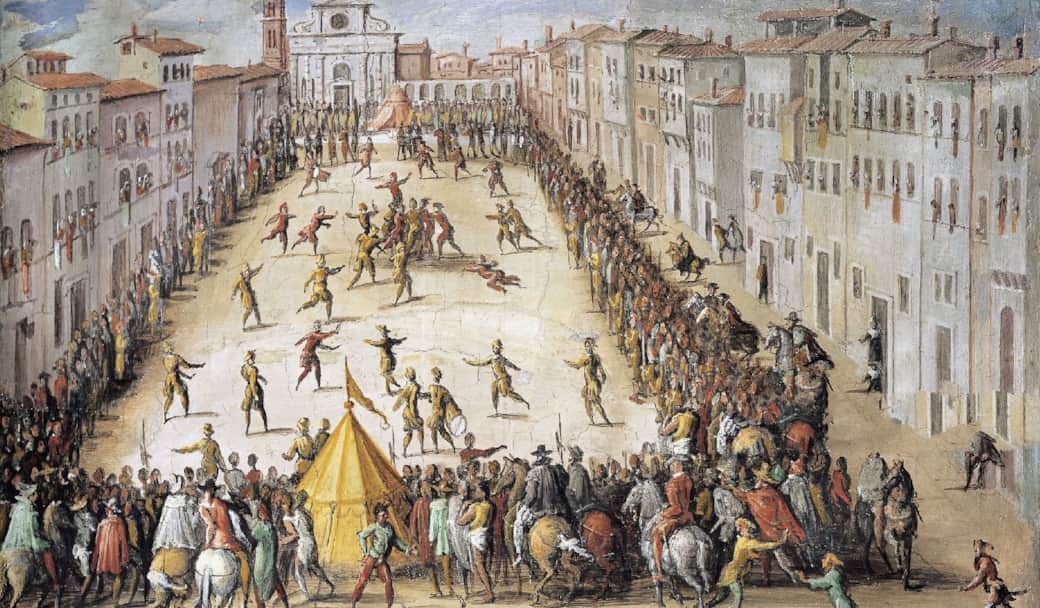
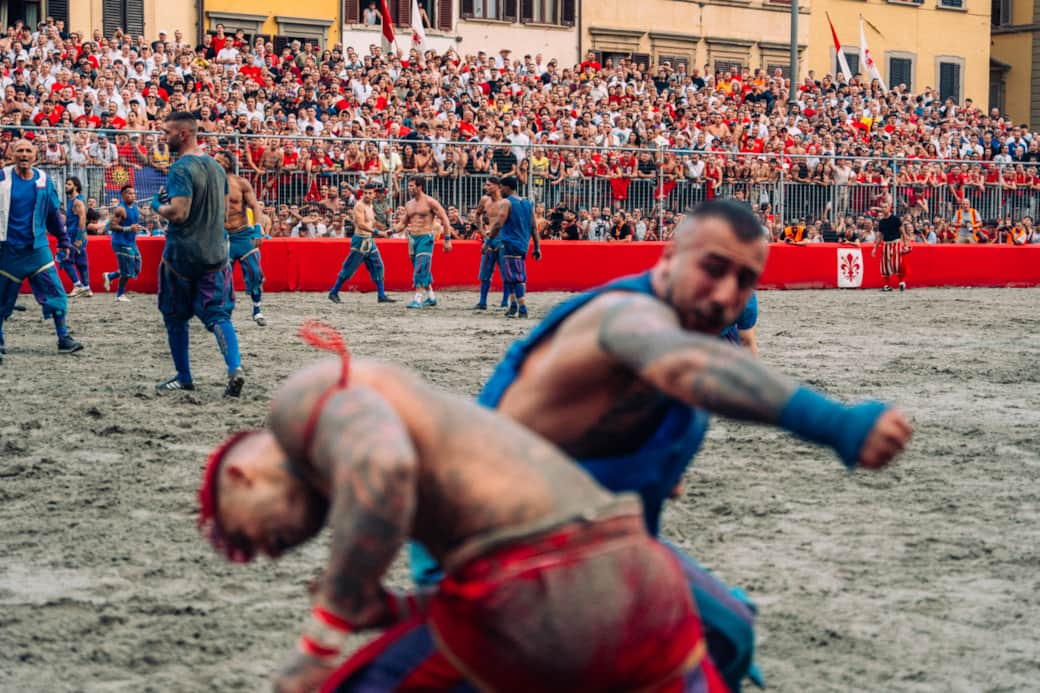
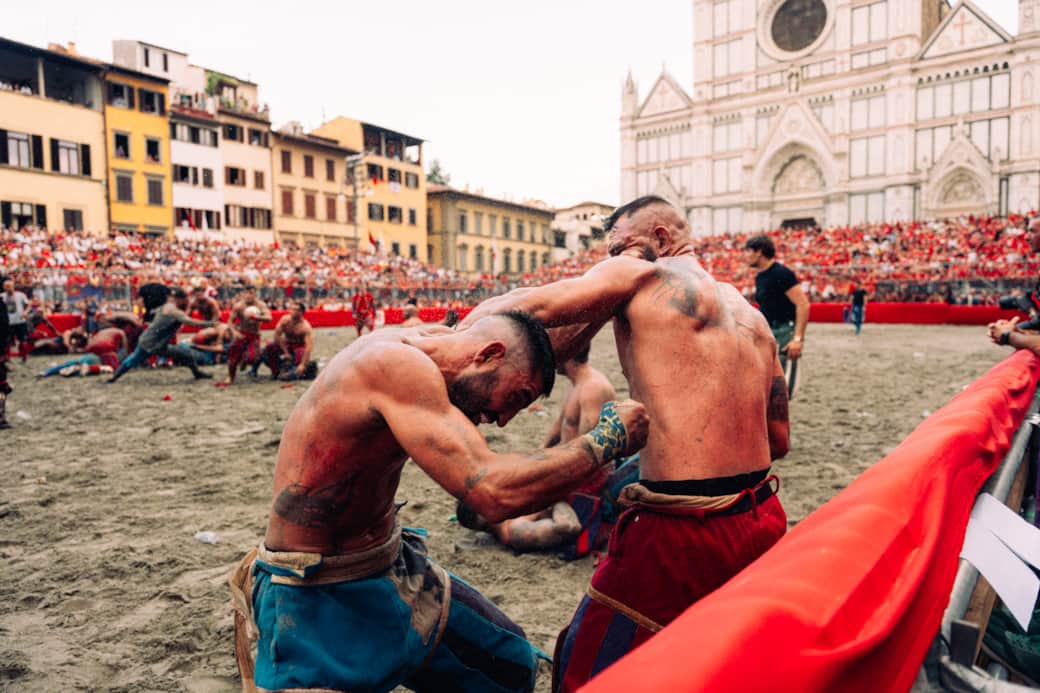
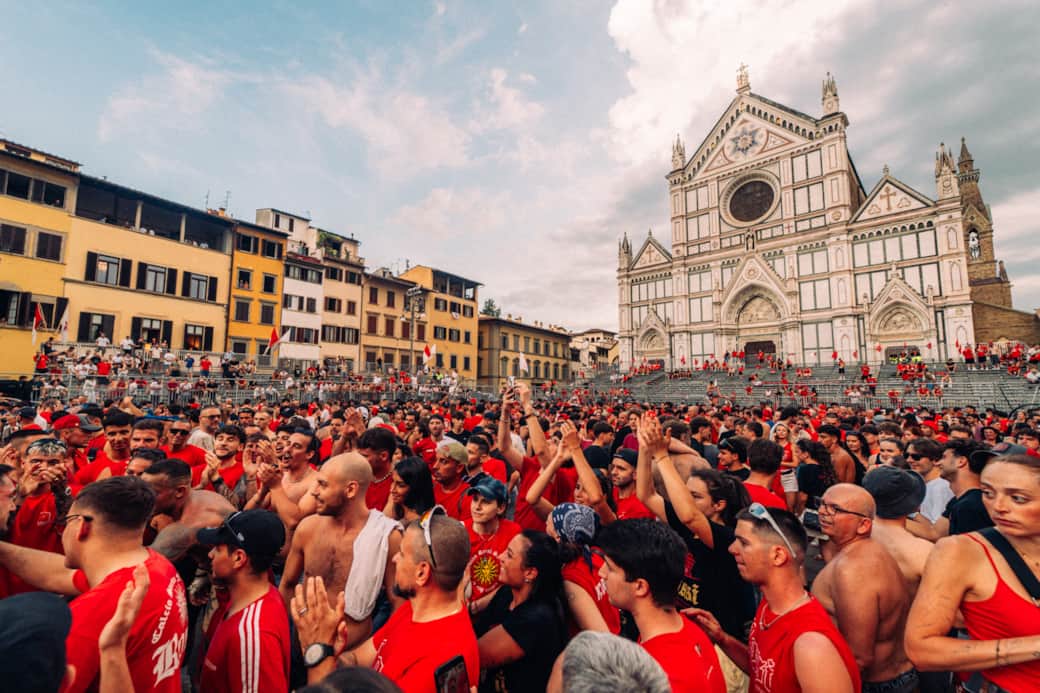
No, you haven’t got the wrong sport... it's not boxing, it's just a moment taken from an usual match of the famous and spectacular Florentine Historic Football.

Played 27 each team, there is just one rule: "there are no rules" ... jokes a part, nowadays this is not true any longer, but till a few decades ago that was reality.

Any act or move to stop your adversary was allowed... it was the norm to find several players in the hospital at the end of the game. Today a few moves are banned but still it is a sport “only for the braves”.

Calcio Storico Fiorentino, a brutal fusion of football, soccer, rugby, and mixed martial arts, is a tradition dated back to the 16th century that serves as the beating heart of Florence's cultural identity. 

Rooted in the city's spirit of defiance and local pride, this "historic football" is more than a sport; it is a ritualistic reenactment of Florentine strength and history.

This historic traditional sport is played every year in the Santa Croce square, and it recalls the football match played by the Florentines during the war against the King Carlos V of Spain, when the city was surrounded by the enemy army and the Florentines decided to play a football game under the enemy's nose, accompanied by loud music to show they were unfazed by the starvation and isolation of the siege.

Every year in June a Tournament is played with the 4 quarters of historic Florence competing to win the trophy: the "Panno" and the "Vitella". Curious ? Read further ....


The tournament features four teams, each representing one of the historic quartieri (districts) of Florence. Loyalty to these colors is fierce, and traditionally, players (known as calcianti) must be born or raised within their respective district:

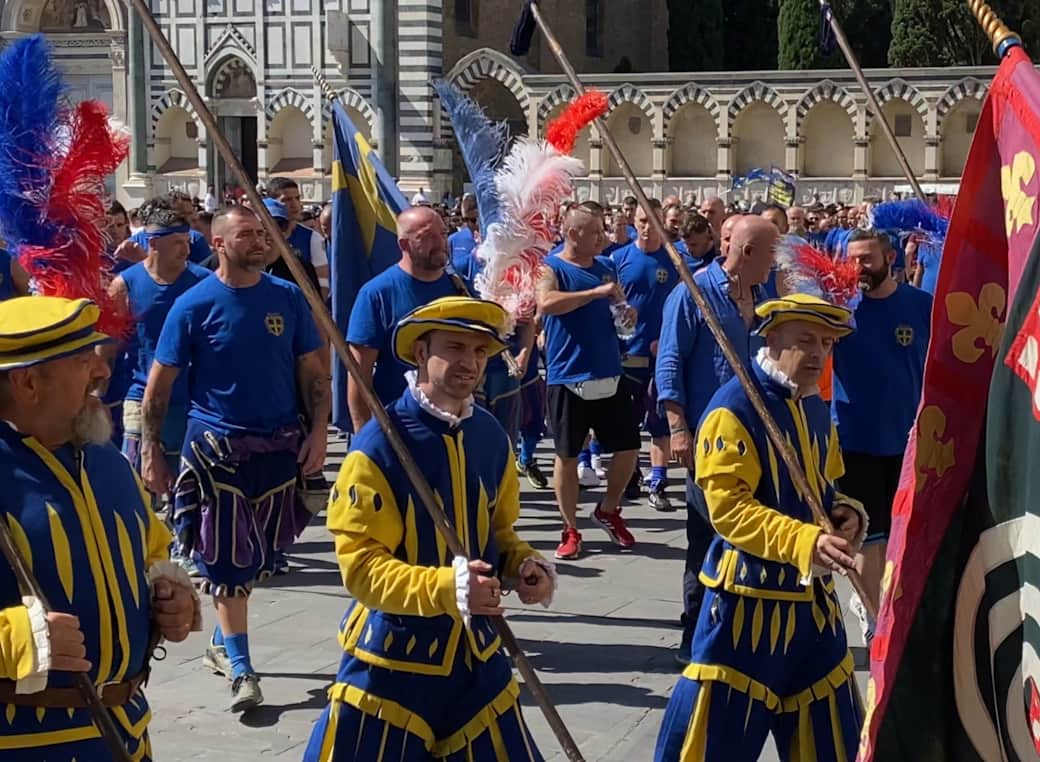
  • Azzurri (Blues): Representing the district of Santa Croce.
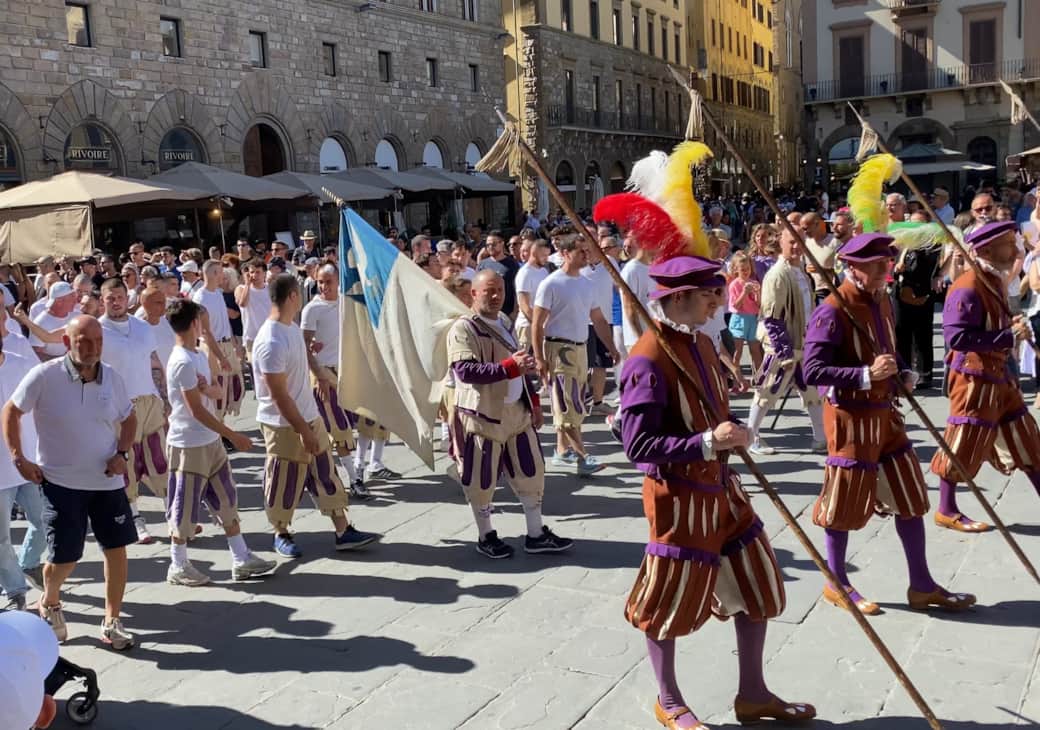
  • Bianchi (Whites): Representing the district of Santo Spirito.
  • Rossi (Reds): Representing the district of Santa Maria Novella.
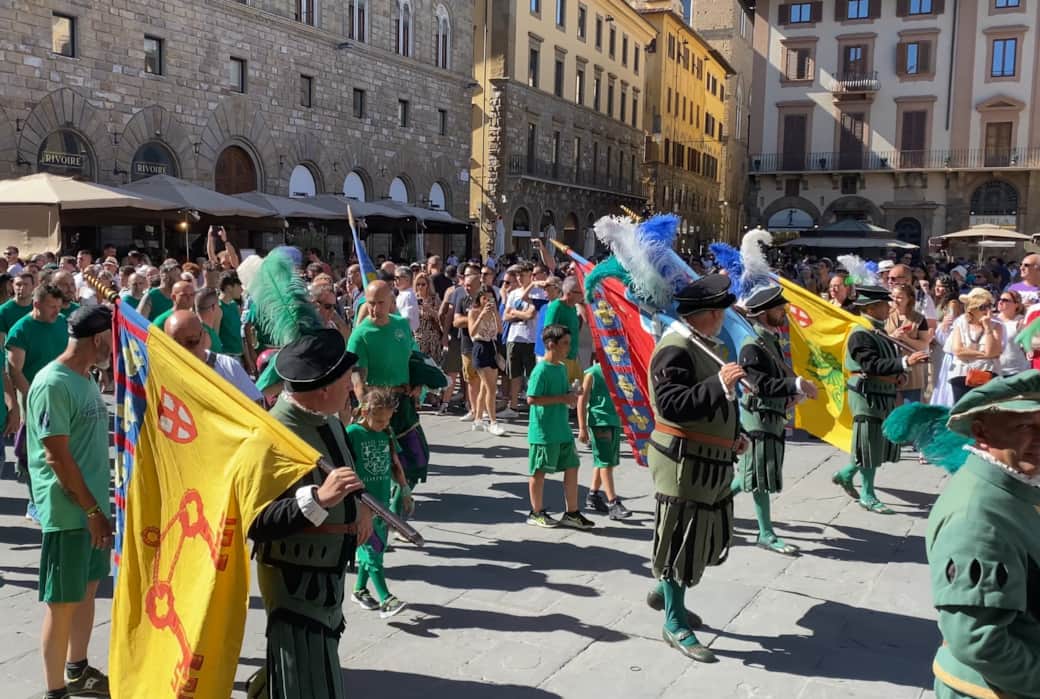
  • Verdi (Greens): Representing the district of San Giovanni.


How was this tradition born ? While its distant ancestors include the Greek sferomachia and the Roman harpastum, the modern legend of Calcio Storico was forged in the 16th century. The most iconic moment in its history occurred on February 17, 1530, during the Siege of Florence by the Imperial troops of Charles V. In an act of pure bravado and psychological warfare, the Florentines staged a match in Piazza Santa Croce

Its popularity waned in the 18th century, but the game was revived in 1930 to commemorate the 400th anniversary of that historic siege. Today, it remains an annual fixture of Florentine life, culminating on June 24, the feast day of the city’s patron saint, San Giovanni.

Calcio Storico Fiorentino, often described as a brutal fusion of soccer, rugby, and mixed martial arts, is a centuries-old tradition that serves as the beating heart of Florence's cultural identity. Rooted in the city's spirit of defiance and local pride, this "historic football" is more than a sport; it is a ritualistic reenactment of Florentine strength and history.
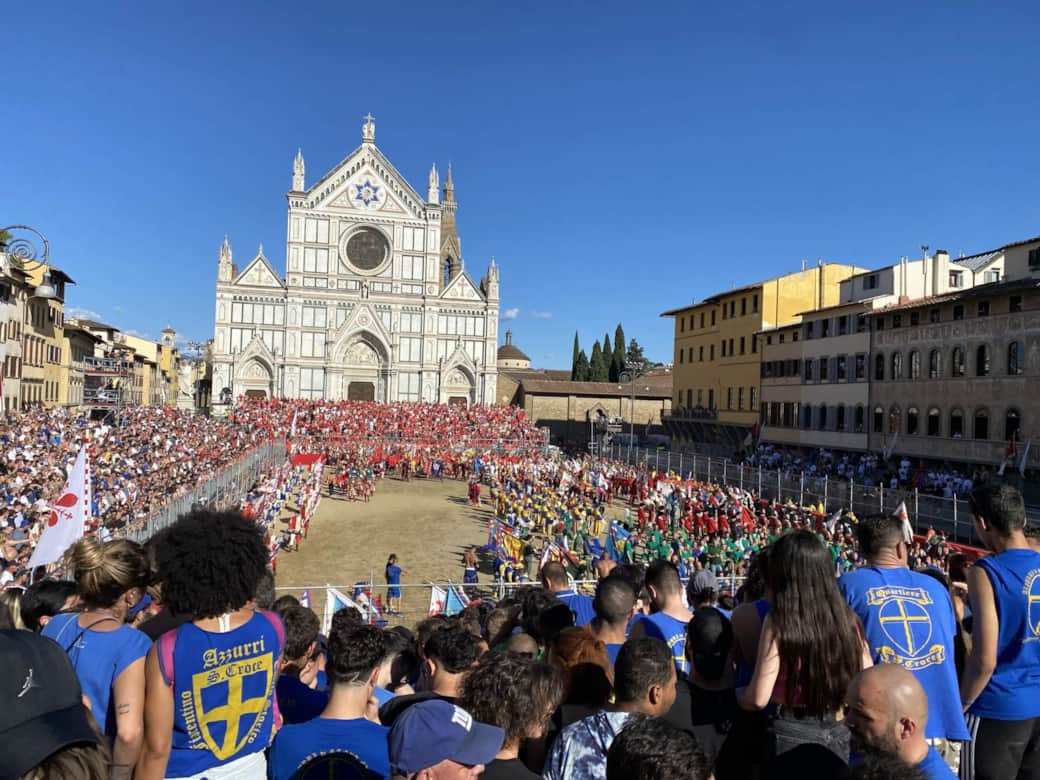
The Rules of Engagement are brutal. Matches take place on a large, sand-covered rectangular field in Piazza Santa Croce. Each team consists of 27 players who compete for 50 minutes without breaks or substitutions.

  • Scoring: A goal, called a caccia, is scored by throwing by any means the ball over the opponent’s end line into a net that spans the width of the field. If a player misses and the ball goes above the net, the opposing team is awarded a mezza caccia (half-point).
  • The Combat: The game is notoriously violent, although not as much as a few decades ago. Modern rules strictly prohibit "dirty" tactics like sucker-punching from behind or attacking a single opponent with multiple players.
  • Field Positions: Each side typically fields 15 forwards (corridori), 5 midfielders (sconciatori), 3 fullbacks (datori innanzi), and 4 goalkeepers (datori indietro).
  • The Prize: Historically, the winning team received a Chianina cow “La Vitella”, which would be slaughtered for a city-wide feast; and a painted banner called “Il Cencio”.

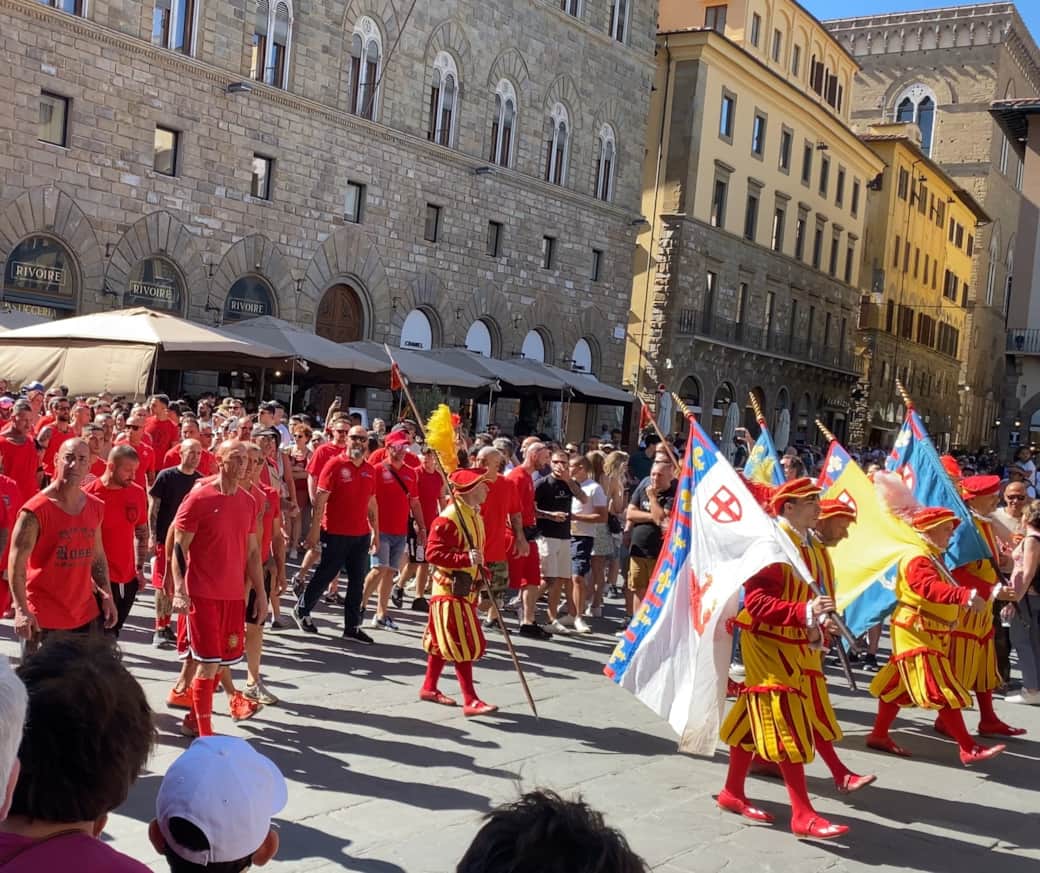
The matches are preceded by the Corteo Storico della Repubblica Fiorentina, a magnificent parade of over 500 people dressed in 16th-century Renaissance liveries. Normally also the inhabitants and supporters of the “Quartieri” take part to the procession by singing and shouting in favor of their part and, of course, against the others. You can recognise them as they normally wear t-shirts with the color of the quarter they belong. This procession winds through the streets of Florence, starting from Piazza di Santa Maria Novella throughout the city medieval centre to end up in Piazza Santa Croce, where the match takes place, on the “Sabbione”, the sandy pitch.

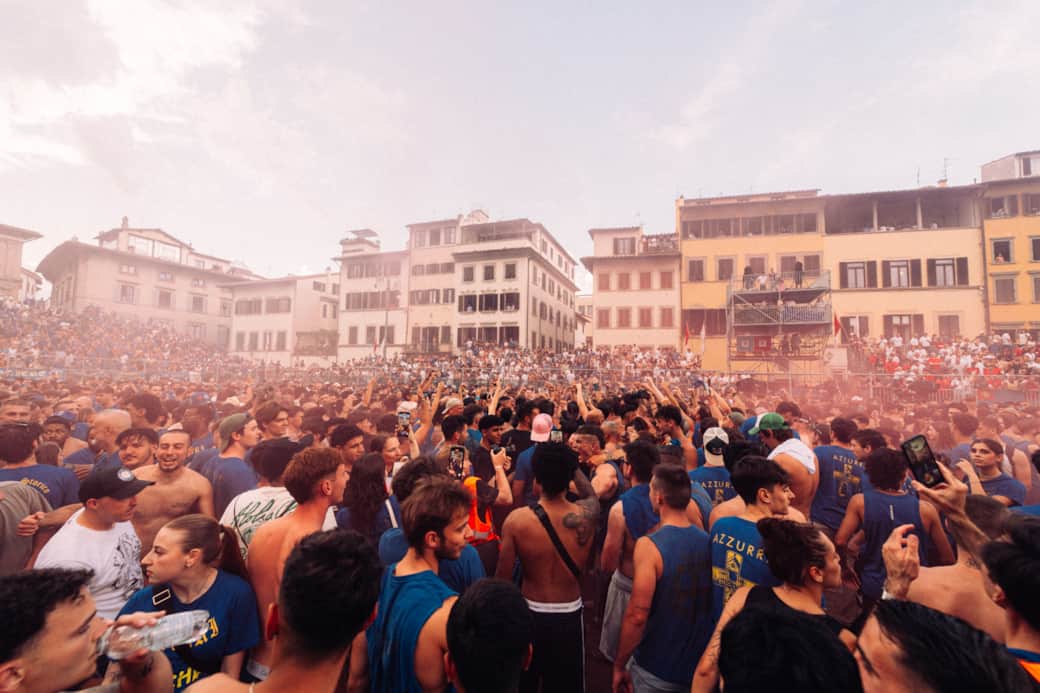
Last two editions 24 and 25 were won by the "Rossi of Santa Maria Novella", who defeated both times in the final the "Azzurri di Santa Croce".

Who is going to take the "Cencio" in 2026? Come watch it yourself for an unforgettable experience !

For the 2026 season, the tournament is expected to follow its traditional schedule in June, with semi-finals early in the month and the grand final on June 24. For official information and updates on ticket sales, visitors should refer to the official Calcio Storico website and tickets can be bought online on the website from TicketOne (www.ticketone.it). Sales usually start at the beginning of June.


Our warm suggestion: buy your tickets as soon as they are available, especially for the final tickets get sold out very quickly.

©2026 The Florence Royal Suite All rights reserved - Powered byLodgify