Logo

Welcome to The Florence Royal Suite Collection

Your Luxury Cozy Nest In The Very Heart Of Renaissance

The Florence Royal Suite

Inside Florence’s Fortress of Power: The Ultimate Guide to Palazzo Vecchio (History, Highlights, & Hidden Secrets)

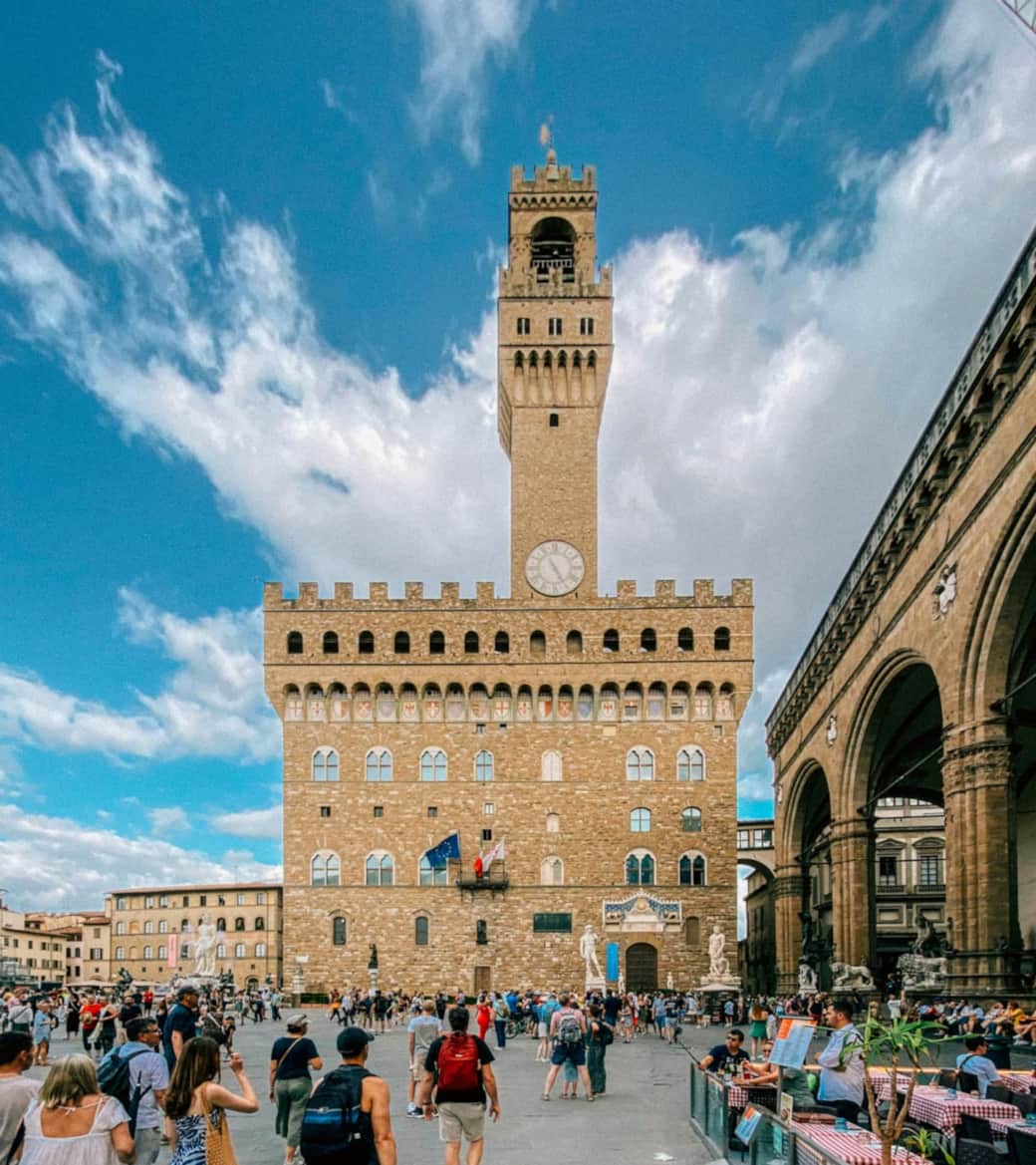
If you've ever walked through the heart of Florence, you've felt it staring down at you. You can't miss it. Right there in Piazza della Signoria, jutting into the Tuscan sky like a medieval middle finger to anyone who dared mess with the Republic.


Palazzo Vecchio isn’t just a museum. It’s a battlefield. A political chessboard. A Medici playground.

Most tourists snap a quick picture of the fake David by the entrance, eat an overpriced gelato, and wander off toward the Uffizi. Big mistake. Because the real drama, the assassinations, the secret escape routes, the lost masterpieces, is hiding right behind those heavy stone walls. Let's peel back the layers of Florence’s legendary town hall.

From Rubble to Republic: A Quick History

Back in 1299, the Florentine Republic had a problem. The city was practically a warzone of rival families (Guelphs vs. Ghibellines, anyone?). The government magistrates, the Priori, needed a place to work where they wouldn't, you know, get stabbed in the street.

Enter Arnolfo di Cambio. The guy who designed the Duomo. They basically told him, "Build us a bunker, but make it look good."

And he did. He created this massive, blocky, rusticated stone fortress. But here's a quirky historical detail: see how the building isn't perfectly square? It's slightly crooked. That’s because it was built on top of the ruined houses of the Uberti family, the defeated Ghibelline rebels. The Republic refused to let the new building sit directly on "cursed" traitor soil, forcing Arnolfo to squeeze the foundations into an awkward, asymmetrical plot. Petty? Absolutely. Beautiful? Somehow, yes.

For centuries, this building was the beating heart of Florentine politics. Then the Medici family moved in.

Cosimo I de' Medici decided the old fortress needed a glow-up. He hired Giorgio Vasari in the 1500s to gut the interior and transform it into a lavish Renaissance palace. Suddenly, medieval gloom was out. Gold leaf, massive frescoes, and mythological ceiling paintings were in. Eventually, the Medici moved across the river to the Pitti Palace (making this building the "Old Palace", Palazzo Vecchio), but the sheer arrogance of their renovation remains intact.

The Absolute Highlights: What You Can't Miss

You could spend an entire day getting lost in here, but if you’re short on time, these are the heavy hitters.

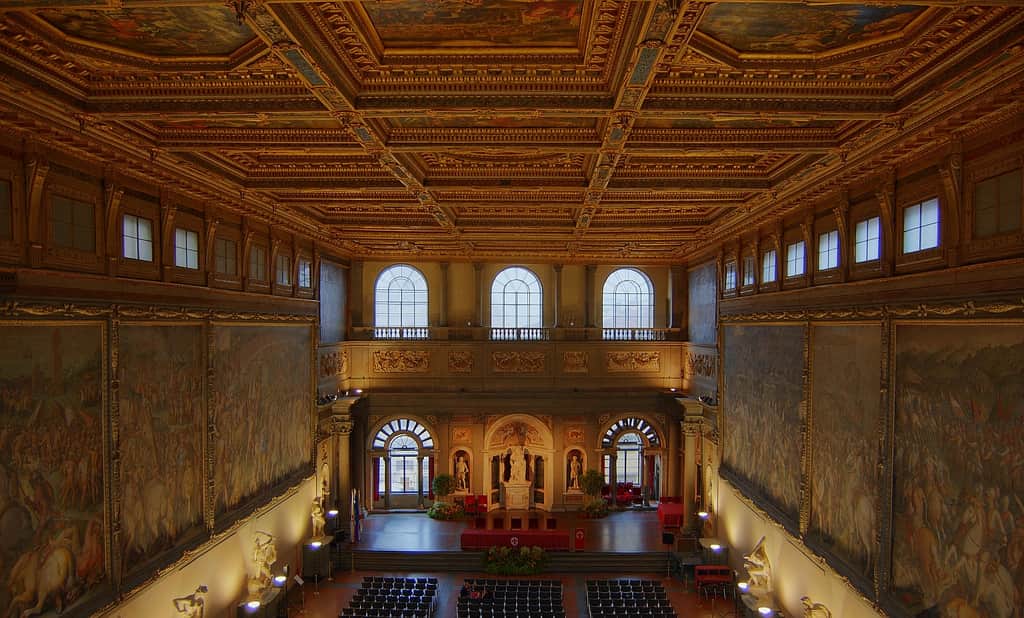
1. The Salone dei Cinquecento (Hall of the Five Hundred)

Drop everything. When you walk into this room, your jaw is going to hit the terracotta floor.

It is colossal. 54 meters long, 23 meters wide, and 18 meters high. It was originally built in 1494 for a council of 500 men when Florence briefly kicked the Medici out and tried to be a strict republic under the fiery monk Girolamo Savonarola.

But when the Medici clawed their way back to power, Duke Cosimo I had Vasari remodel it into a giant propaganda machine. Every single inch of the ceiling, which is suspended using a brilliant system of hidden trusses, is painted to glorify Cosimo.

The walls feature massive frescoes of Florentine military victories over Pisa and Siena. But look closely at the eastern wall. Somewhere high up in the battle scene, there is a tiny green flag with the words Cerca Trova ("Seek and you shall find"). Legend has it that Vasari painted this over a lost, unfinished masterpiece by Leonardo da Vinci (The Battle of Anghiari), leaving a clue for future generations. Did he destroy Leonardo's work, or is it still hidden behind a false wall? Art historians are literally still fighting about it.

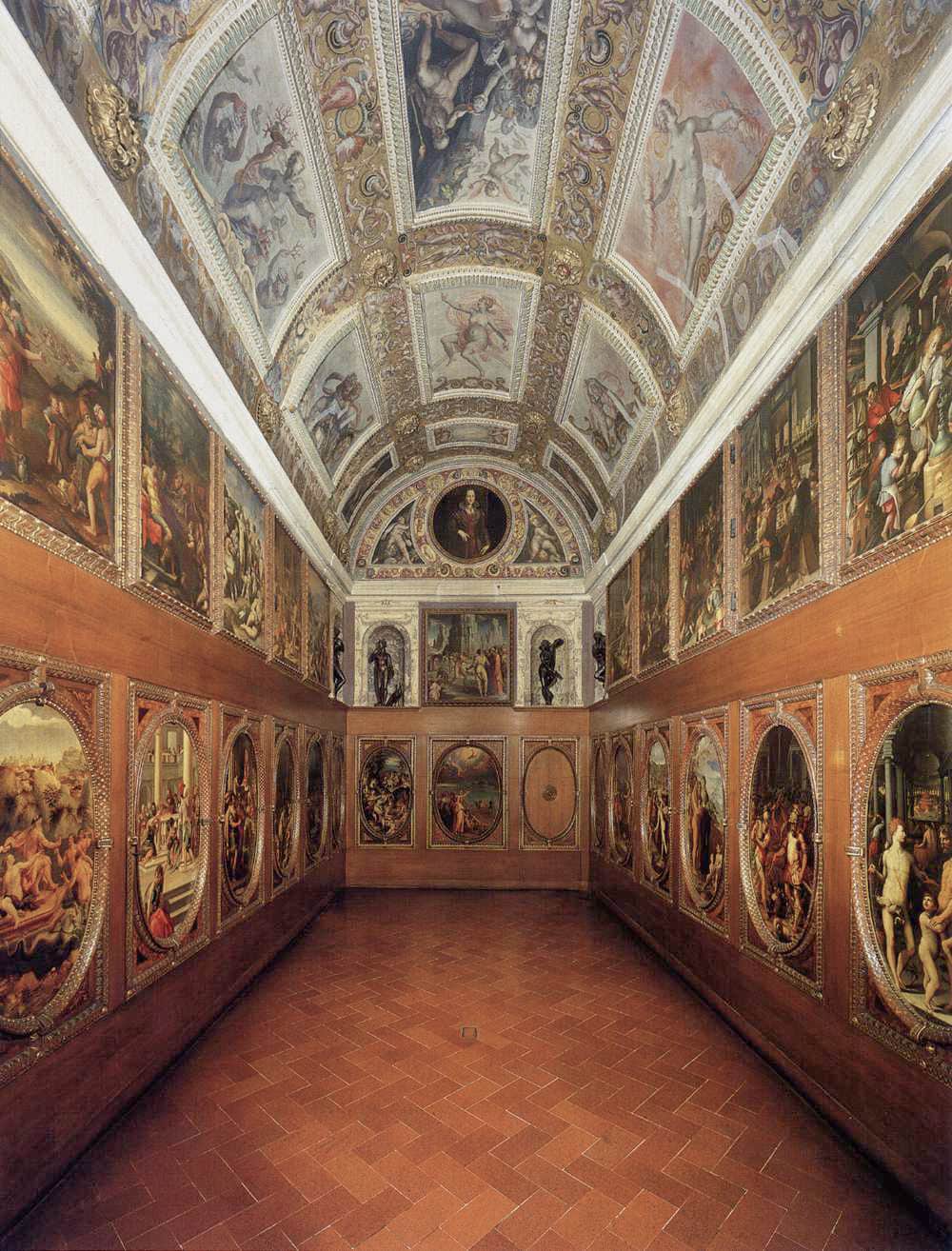
2. The Studiolo of Francesco I

This is the exact opposite of the Salone. It’s tiny. Windowless. Claustrophobic, almost.

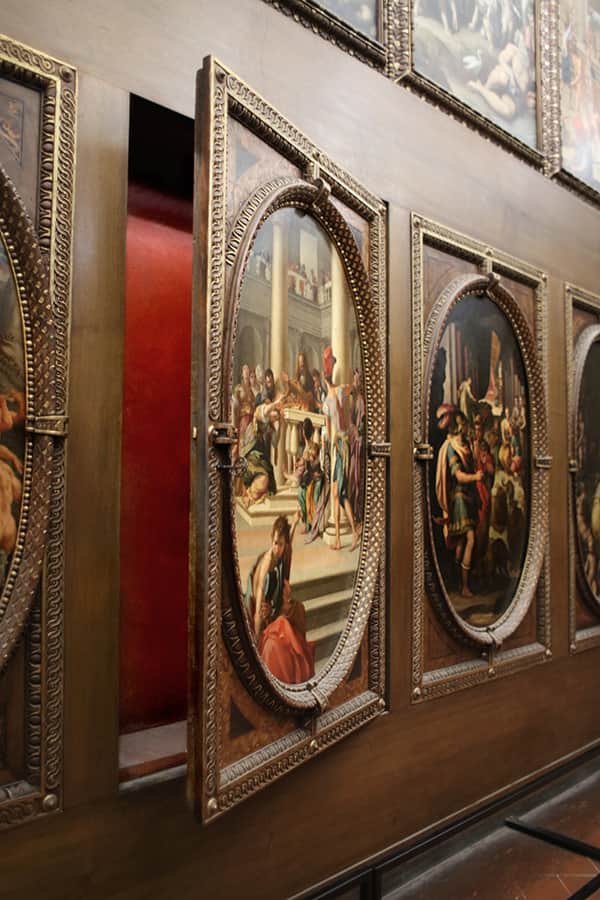
Francesco I de' Medici was an eccentric guy. He hated politics and loved alchemy, poisons, and weird science. His Studiolo was a secret vault where he kept his potions, gems, and oddities. The walls are covered in floor-to-ceiling paintings, but they aren't just decorations, they're disguised cabinet doors. Every painting corresponds to the bizarre element (water, fire, earth, air) hidden behind it. It feels less like a Renaissance room and more like the lair of a very wealthy Bond villain.

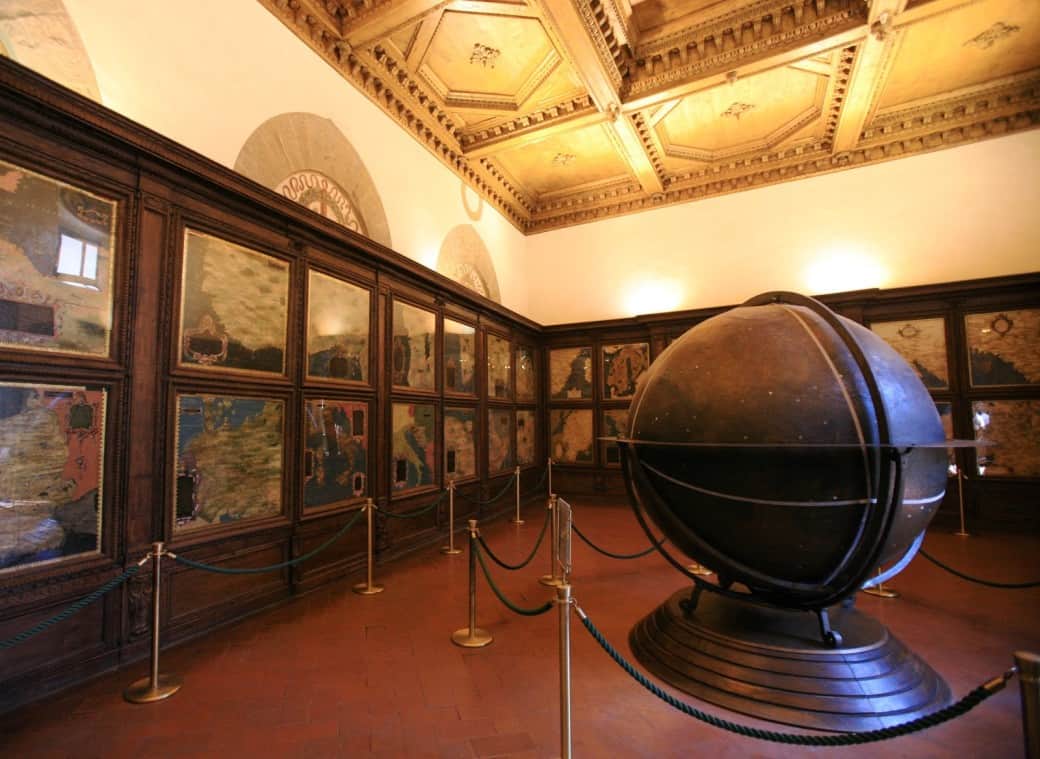
3. The Map Room (Sala delle Carte Geografiche)

Before Google Earth, there was the Map Room.

Fifty-three massive, hand-painted maps from the 16th century cover the wooden cabinets here. It was Cosimo's way of showing he ruled the world (or at least, knew what it looked like). They had maps of Europe, the Americas, and parts of Asia. Some are remarkably accurate. Others? Not so much.

But the real secret here is behind the map of Armenia. Give it a push, and it opens into a secret passageway used by the Medici to escape unseen. (Sadly, the guards frown upon tourists trying to shove the 500-year-old maps, so you’ll just have to imagine it).

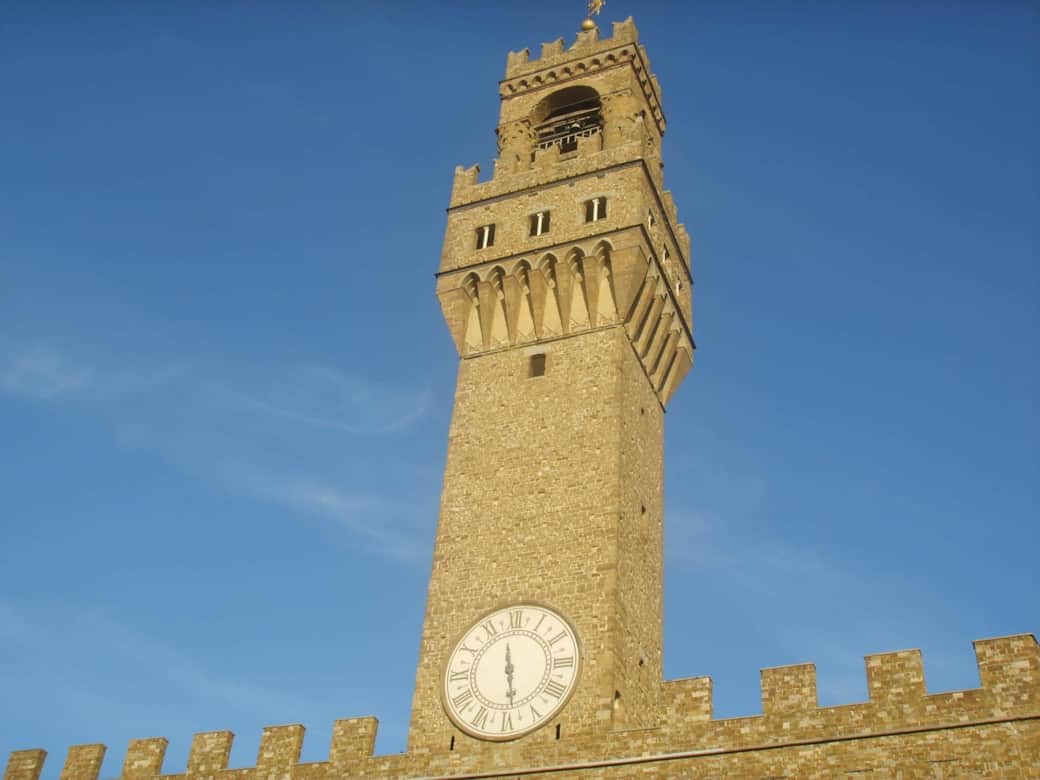
4. Torre di Arnolfo (The Tower)

If you've eaten too much pasta, this is how you work it off.

Standing 95 meters tall, the Arnolfo Tower dominates the Florentine skyline. The climb is no joke, over 400 narrow, steep steps. But the payoff? A 360-degree, uninterrupted view of the Duomo, the red-tiled roofs, and the rolling Tuscan hills in the distance.

Halfway up, there’s a tiny, grim cell known as the Alberghetto (the "little hotel"). It’s a sarcastic name for a political prison. Cosimo the Elder was locked up here in 1433 before being exiled, and Savonarola spent his final days here in 1498 before they dragged him down to the piazza and burned him at the stake. A room with a view, sure, but terrible room service.

The Weird, the Hidden, and the Unexplained

Alright, let's get into the good stuff. The quirky details that most tour groups just breeze right past.

L’Importuno: Michelangelo’s Hidden Graffiti

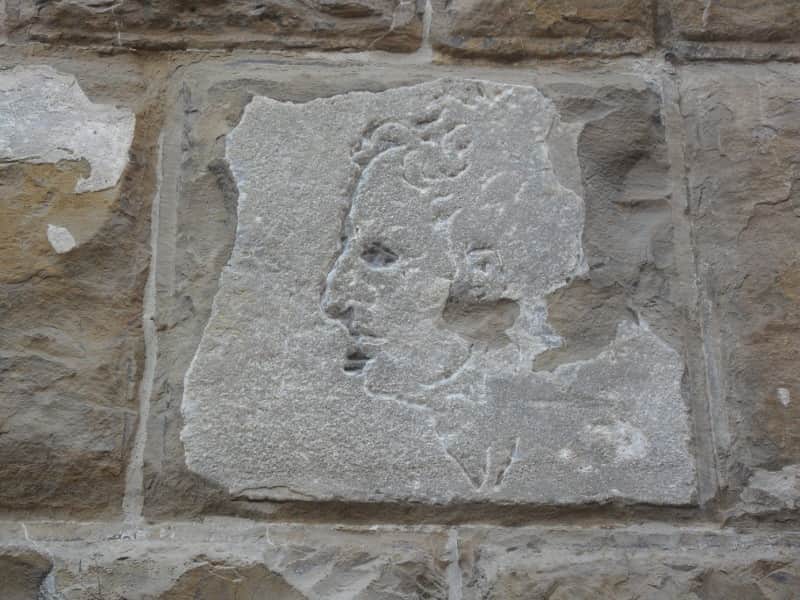
Before you even buy a ticket, walk over to the right side of the main entrance. Look closely at the rough stone blocks near the corner. Etched directly into the facade is a crude profile of a man's face.

Locals call it L’Importuno (the annoying guy). The story? Michelangelo was constantly being harassed by a bore who cornered him in the piazza to complain about his debts. One day, while stuck listening to this guy drone on, Michelangelo allegedly put his hands behind his back and chiselled the man’s portrait into the wall, entirely by feel, just to pass the time. Is it true? Who knows. But it’s the oldest piece of street art in Florence.


The UFO Painting

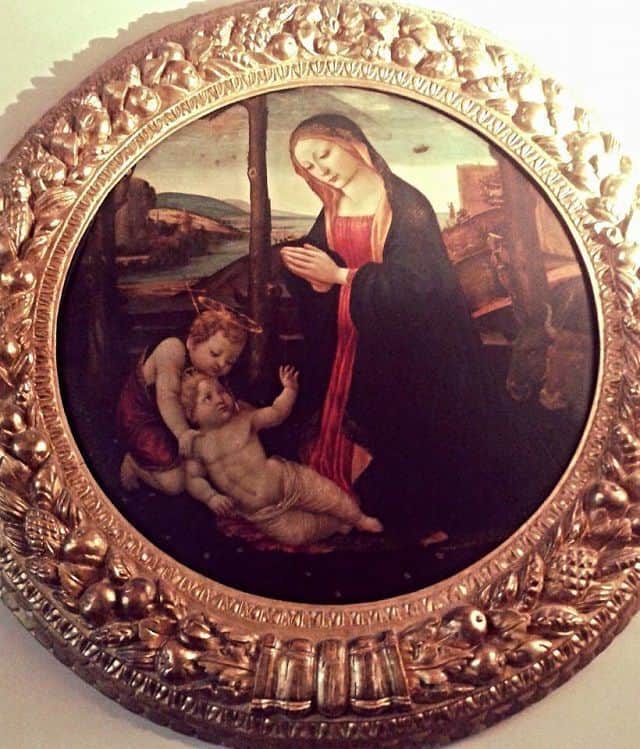
Upstairs in the Hercules Room, there is a circular painting of the Madonna and Child (Madonna dell'Ufo). In the background, up in the sky, there is a highly suspicious, glowing, oval-shaped object. And right below it, a man and his dog are looking up, shielding their eyes from the glare.

UFO enthusiasts lose their minds over this painting. Art historians will aggressively tell you it’s just a stylized depiction of an angel in a luminous cloud, a common motif in the 15th century. I'll let you decide. But it definitely looks like a flying saucer.

The Secret Passages

Palazzo Vecchio is basically Swiss cheese. The Medici were paranoid (and given how many people tried to stab them, fairly so). They honeycombed the palace with hidden staircases, concealed doors, and hollow walls.

The most famous extension of this paranoia is the Vasari Corridor, an elevated enclosed walkway that connects Palazzo Vecchio, runs through the Uffizi, crosses the Ponte Vecchio, and ends at the Pitti Palace. It allowed the Grand Duke to commute across the city without ever stepping foot on the dirty, dangerous streets below. You can actually book special "Secret Passages" tours of Palazzo Vecchio to walk through the hidden stairwells hidden behind the walls of the main rooms. Do it. It’s worth every penny.

Practical Tips for Your Visit

So, you're convinced. You want to go. Here is how you do it without losing your sanity.

  • Book in advance. Yeah, I know, everyone says this about everything in Italy. But seriously. Florence in the summer is a chaotic sea of humanity. Buy your ticket online through the official Florentine museums website.

  • Go late. Palazzo Vecchio often stays open later than the Uffizi or the Accademia (sometimes until 10 PM in the summer). Going at 8 PM is a game-changer. The crowds thin out, the sunset hitting the Salone dei Cinquecento is pure magic, and the tower climb is infinitely less sweaty.

  • The Tower requires a separate ticket. Don't just buy the standard museum entry and assume you can climb the tower. It’s an add-on, and it sells out fast. Also, they close the tower when it rains (slippery ancient stone + tourists = bad times).

  • Take the Secret Passages Tour. If you have the budget, this small-group tour takes you behind the map room, into the rafters above the Salone, and through the Duke's hidden stairways. You get to see the guts of the palace.

Palazzo Vecchio isn’t just an art gallery. It’s a physical manifestation of Florence’s chaotic, brilliant, cutthroat history. The Uffizi has the paintings, the Accademia has David, but Palazzo Vecchio? Palazzo Vecchio has the soul of the city.

Next time you're standing in Piazza della Signoria eating that gelato, don't just look at the statues outside. Go inside. Climb the tower. Look for the UFO. Find Michelangelo’s graffiti. The ghosts of the Republic are waiting.


©2026 The Florence Royal Suite All rights reserved - Powered byLodgify