Logo

Welcome to The Florence Royal Suite Collection

Your Luxury Cozy Nest In The Very Heart Of Renaissance

The Florence Royal Suite

A Carnivore’s Dream and a Leather Labyrinth: The Ultimate Guide to Florence’s San Lorenzo Market

Before you even see the San Lorenzo Market, you hear it.

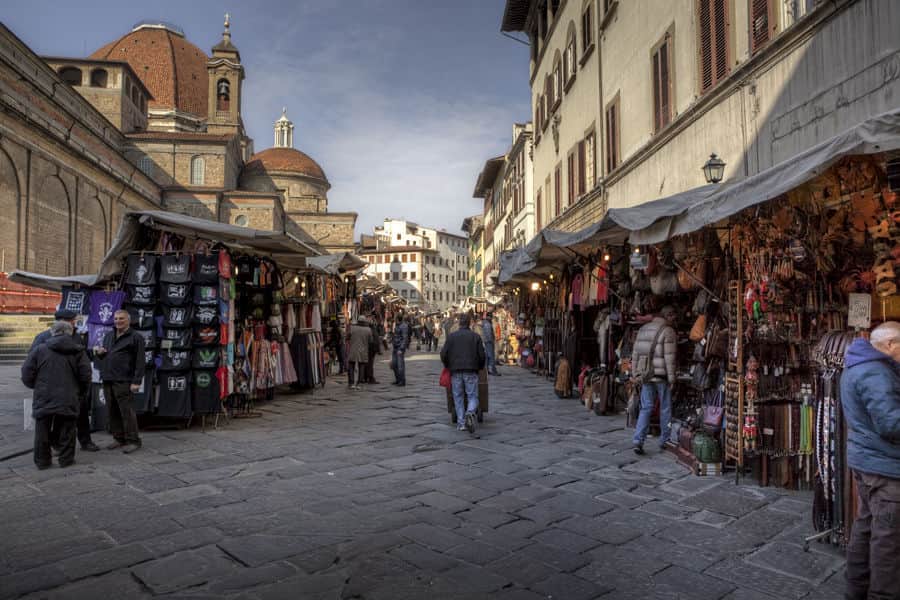
It hits you from a few blocks away. The aggressive, melodic shouts of stall vendors hawking leather belts in four different languages. The screech of metal shutters rolling up. The low, rumbling hum of thousands of people tightly packed into a medieval street grid, all collectively deciding what they want for lunch.

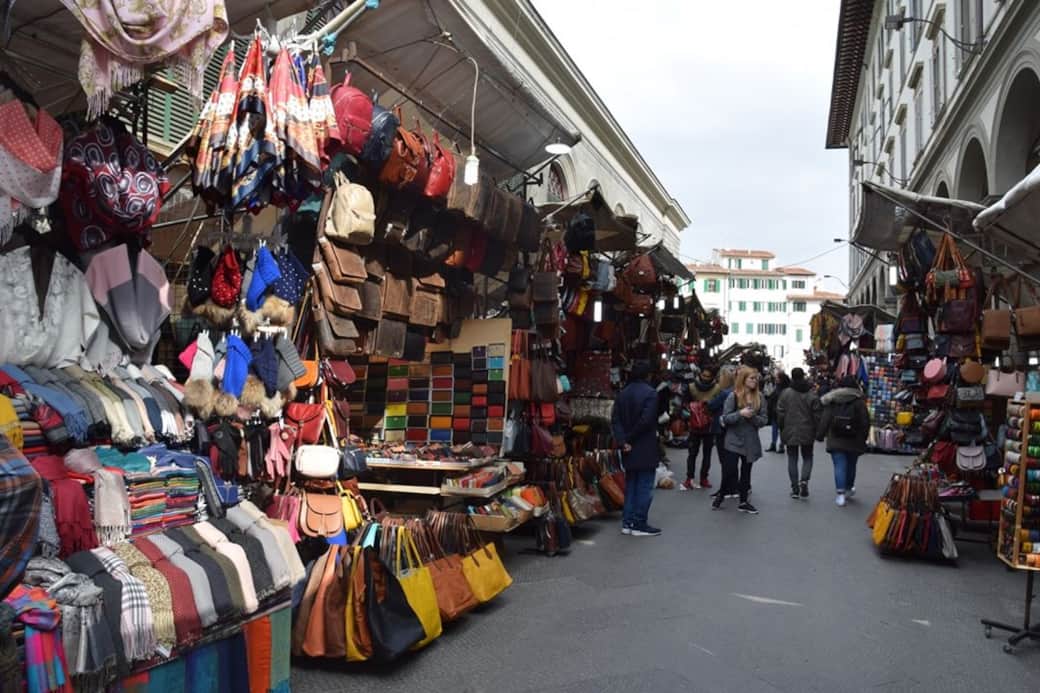
When travelers talk about "the market in Florence," they are usually lumping two completely different beasts into one massive, chaotic ecosystem. There is the outdoor market, a sprawling, serpentine maze of canvas tents selling leather jackets, silk scarves, and cheap souvenirs. Then, there is the indoor market, the Mercato Centrale, a towering 19th, century cathedral of iron and glass dedicated entirely to the visceral, unapologetic glory of Tuscan food.

If the Uffizi Gallery is the refined, intellectual mind of Florence, San Lorenzo is its loud, rumbling, carnivorous stomach.

You can easily spend an entire day getting lost in this neighborhood. You will probably get elbowed by an eighty, year, old Florentine grandmother aggressively hunting for the best artichokes. You will definitely smell like roasted pork and aged cheese by the time you leave.

It is brilliant. It is exhausting. Here is exactly how to navigate the beautiful chaos of the San Lorenzo Market without getting ripped off, overwhelmed, or trapped in a tourist snare.

Part 1: The Outdoor Leather Market (Surviving the Hustle)

The streets surrounding the massive Basilica of San Lorenzo are choked with hundreds of outdoor stalls. This is the historic leather market. For centuries, Florence has been the epicenter of the Italian leather trade, thanks to the Arno River providing the necessary water for the tanning process.

Today, walking through these outdoor aisles requires a bit of tactical maneuvering.

The vendors are aggressive. They are charming, persistent, and highly skilled at reading body language. If you pause to look at a wallet for more than two seconds, a calculator will suddenly materialize in front of your face with a "special morning discount just for you, my friend."

How to Spot the Real Deal

Let’s have some brutal honesty. Not everything in the San Lorenzo outdoor market is bespoke, handmade artisan leather. In fact, a significant portion of it is mass, produced and imported, stamped with a generic "Firenze" logo.

If you are just looking for a cheap, fun souvenir bag for thirty euros, go wild. But if you want a genuine, high, quality Florentine leather jacket that will last a lifetime, you need to know how to separate the wheat from the chaff.

  • The Smell Test: Real, vegetable, tanned leather has an earthy, organic, slightly sweet musk. Fake leather, or heavily chemically treated cheap leather, smells distinctly like plastic and petroleum. Trust your nose.
  • The Edge Test: Look at the edges of a belt or a bag strap. Real leather will have a slightly rough, raw edge. If the edge looks perfectly smooth, shiny, and painted over with a thick layer of rubbery plastic, it’s a mass, produced shortcut.
  • The Lighter Myth: Vendors will often whip out a cigarette lighter and hold the flame to a jacket to prove it’s "real." This is a parlor trick. Even cheap, treated leather won't immediately burst into flames if you hold a lighter to it for two seconds. Don't be swayed by the fire show.
  • Haggling is Mandatory: The price on the tag is a fiction. It is an opening bid. If you are buying from the outdoor stalls, you are expected to negotiate. A good rule of thumb is to counter with 50% of their initial offer and settle somewhere around 70%. If they let you walk away, you hit their absolute bottom line.

If you want absolute, guaranteed, artisan quality, step behind the outdoor stalls. The actual brick, and, mortar shops lining the streets (places like Bemporad or the smaller family, run bottegas) offer vastly superior goods, albeit at a proper premium.

Part 2: The Architecture of Hunger (Entering Mercato Centrale)

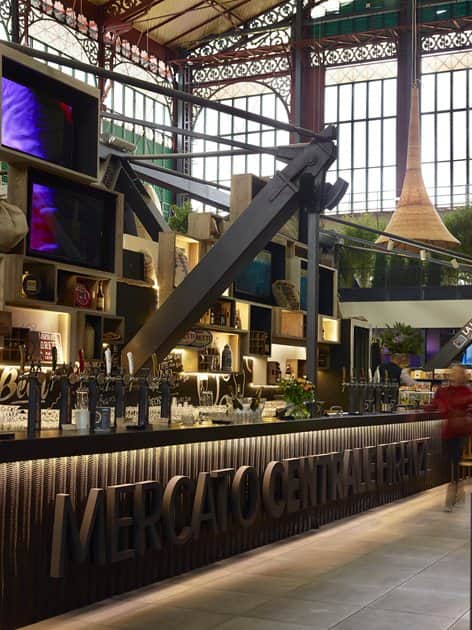
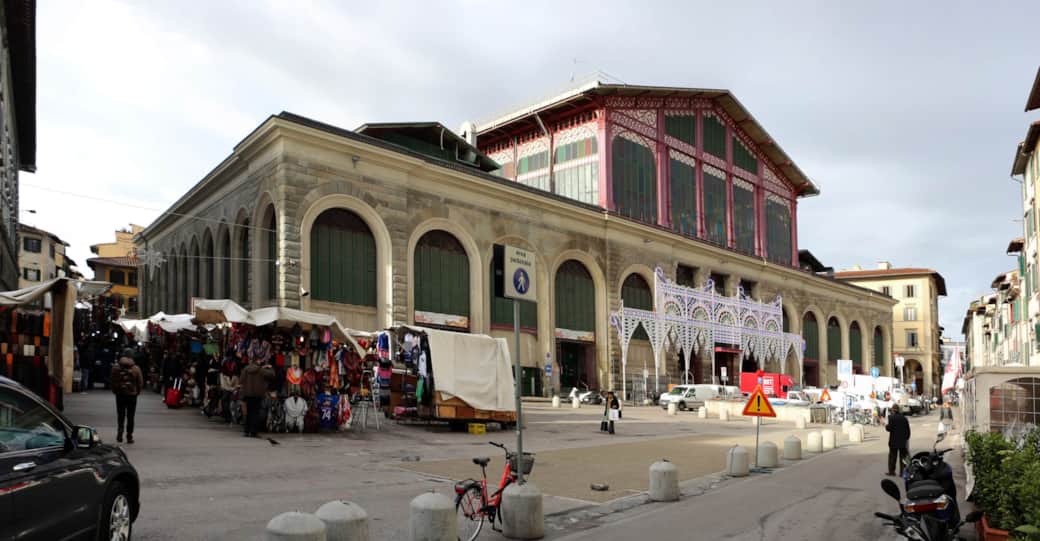
Once you navigate the gauntlet of leather bags, you will suddenly find yourself staring at a massive, green, and, brown iron building that looks like a Victorian train station dropped into the middle of the Renaissance.

Welcome to the Mercato Centrale.

Designed in 1874 by Giuseppe Mengoni (the same architect who designed the famous glass, domed Galleria in Milan), this building was part of a massive urban renewal project when Florence briefly served as the capital of Italy. They tore down a labyrinth of slum housing to build this modern, hygienic, light, filled temple of commerce.

The building is divided into two entirely separate worlds. The ground floor is the historic, raw, blue, collar market. The top floor is a slick, modern, artisanal food hall. You need to experience both.

Part 3: The Ground Floor (Blood, Bone, and Tradition)

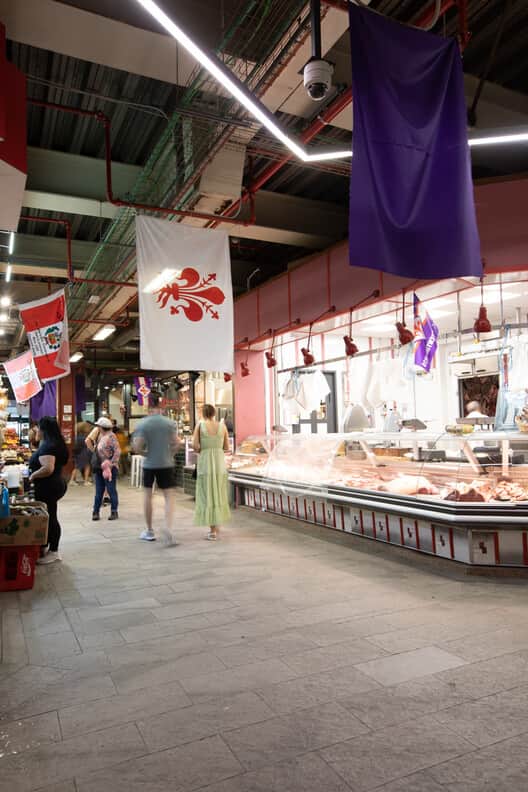
Push through the heavy rubber flaps at the entrance. The temperature drops. The smell of hanging prosciutto, raw earth, and sharp pecorino cheese hits you like a physical wall.

This is the historic ground floor. It operates exactly as it has for over a century, open from 7:00 AM to 2:00 PM (and generally closed on Sundays).

This is not a sterilized supermarket. It is an anatomical education. The butcher counters display every conceivable part of the animal. You will see massive, bone, in slabs of Bistecca alla Fiorentina marbled with bright white fat. You will see skinned rabbits, whole boars, and piles of pale, honeycomb, textured tripe sitting in massive bowls of water.

This is the beating heart of Florentine cucina povera (peasant cooking), a culinary tradition built on the philosophy that absolutely nothing goes to waste.

The Legend of Da Nerbone

If you only eat one thing in Florence, you eat it here.

In the corner of the ground floor sits Da Nerbone, a food stand that has been serving lunch in this exact spot since 1872. You will know it by the massive, chaotic line of construction workers, businessmen in tailored suits, and bewildered tourists all jostling for position.

Nerbone specializes in boiled meats, specifically lampredotto.

What is it? The fourth stomach of a cow. Before you recoil in horror, understand that this is the ultimate Florentine street food. The stomach is slow, boiled for hours in a savory vegetable broth until it becomes ridiculously tender.


Here is how you survive the line at Nerbone:

First, push your way to the register. Do not wait for a single, file line; Italians view lines as vague suggestions. Pay your five or six euros and get a paper receipt. Then, take that receipt to the man with the massive carving knife standing over a steaming vat.

He will fish out a hunk of meat, chop it furiously on a wooden board, and slice open a crusty bread roll. He will dip the top half of the bun directly into the boiling meat broth (this is called bagnato, and it is essential).

He will ask you what sauces you want. You want both. Say: "Salsa verde e piccante." He will slather the meat in a pungent, garlicky parsley sauce and a fiery chili oil.

Grab your dripping, messy sandwich and a cheap plastic cup of Chianti wine. Fight for a stool at one of the small marble tables nearby. Take a bite. It is intensely savory, rich, spicy, and melts in your mouth. It ruins all other sandwiches forever.

Shopping the Ground Floor

Beyond lunch, the ground floor is the best place in the city to buy edible souvenirs. Avoid the overpriced tourist shops near the Duomo and buy your goods here.

  • Pecorino Cheese: Look for the stalls with massive, ash, covered wheels of cheese. Ask to taste a Pecorino Stagionato (aged pecorino) or one infused with black truffles. They will vacuum, seal (sottovuoto) the cheese in plastic so it legally survives the flight home in your checked luggage.
  • Balsamic Vinegar: Real, aged balsamic from Modena is thick like syrup and completely transforms a simple salad or a wedge of parmesan. The vendors here will let you taste them from tiny plastic spoons.
  • Cantucci: These are the hard, almond biscotti native to Tuscany. Buy them by the bag from the bakeries (panetterie) in the market. You are meant to aggressively dunk them into a glass of sweet Vin Santo wine after dinner.

Part 4: The First Floor (The Modern Food Hall)

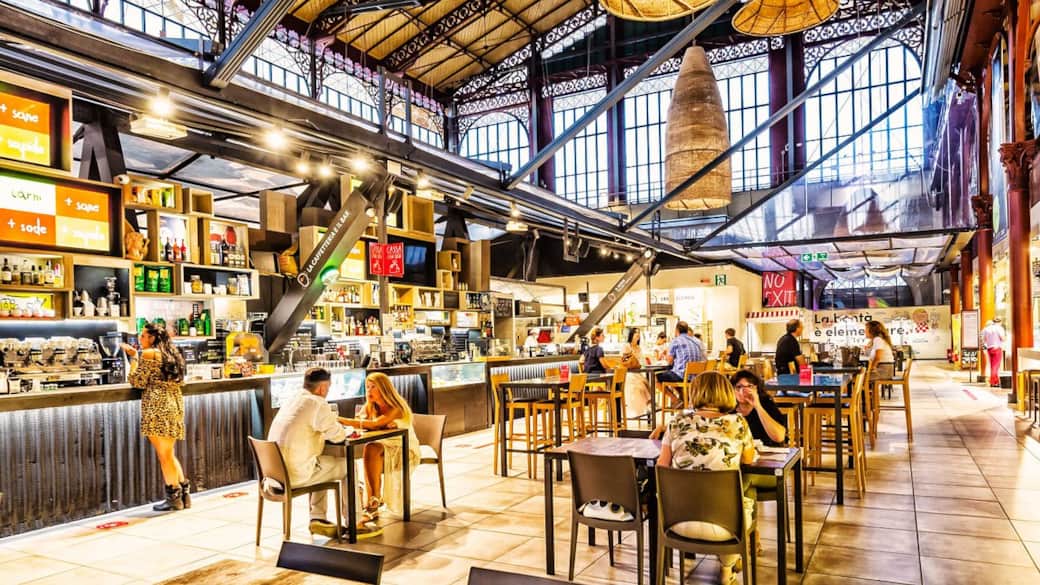
If the ground floor is a gritty, historical documentary, the first floor (up the escalators) is a slick, high, definition culinary magazine.

For decades, the massive upper floor of the market sat abandoned and gathering dust. In 2014, it was entirely renovated and reopened as a massive, 30,000, square, foot artisanal food court. Unlike the ground floor, this space stays open until midnight, 364 days a year.

It is bright, loud, and incredibly trendy. The massive iron trusses of the roof soar overhead, illuminating dozens of distinct food stalls, each dedicated to a specific Italian specialty.

Is it slightly more expensive and tourist, heavy than downstairs? Yes. Is it absolutely fantastic if you are traveling with a group of people who can't agree on what to eat? Also yes.

How to Navigate the Upstairs

The seating is communal. You grab a table, leave someone there to guard it, and scatter to gather your feast. Waiters circle the tables to take your drink orders (there is an excellent Chianti wine bar and a fantastic craft beer stand), but you order the food directly from the stalls.

Here is where you want to spend your money upstairs:

  • The Neapolitan Pizza: Yes, you are in Florence, but the pizza stall here is run by genuine Neapolitan pizzaiuoli. The crust is charred, blistered, and chewy. The mozzarella di bufala is flown in fresh. It takes 90 seconds in the roaring wood, fired oven. It is flawless.
  • Fresh Pasta: Watch the cooks hand, rolling ribbons of pappardelle and folding tortellini behind the glass. Order a plate of Pappardelle al Ragù di Cinghiale (wild boar ragù). It is heavy, rich, and perfectly al dente.
  • Truffles (Il Tartufo): There is an entire stall dedicated to truffles. You can get a simple plate of buttered taglioni buried under a mountain of freshly shaved black truffles. It is an affordable luxury.

A quick warning on truffle oil: If you see bottles of "truffle oil" being sold in the market for ten euros, be incredibly cynical. Almost all cheap commercial truffle oil contains zero actual truffles. It is olive oil spiked with a synthetic chemical compound called 2,4, dithiapentane, which mimics the aroma. If you want real truffles, buy the whole, jarred truffles or eat them fresh at the stalls.

Part 5: The Surrounding Streets (Where the Locals Hide)

When you finally stumble out of the Mercato Centrale, completely gorged on cheese and wine, don't immediately run back toward the Duomo.

The streets radiating out from the market, Via dell'Ariento, Via Sant'Antonino, and Via Panicale, are packed with historic, hole, in, the, wall establishments that have serviced the market workers for generations.

If you need a coffee to wake yourself out of a food coma, find Caffè Pasticceria Sieni. It’s a classic, no, nonsense Florentine bar. Stand at the counter, order an espresso, and throw it back.

If you want to dive deeper into the local wine culture, look for a fiaschetteria or a vinaino. These are tiny wine windows or small bottle shops where locals stop for a quick gottino (a small glass) of red wine on their way home from work. Zanobini on Via Sant'Antonino is legendary. It’s a wine shop that also serves cheap, excellent glasses of local vintages right over the counter. There are no seats. You stand, you drink, you chat with the owner, and you move on.

Essential Survival Tips for San Lorenzo

Before you dive into the chaos, keep these unwritten rules in mind:

  1. Watch Your Pockets: The outdoor leather market is notoriously crowded. You will be bumping shoulder, to, shoulder with strangers while looking up at bags and jackets. This is the natural habitat of the professional pickpocket. Keep your wallet in your front pocket, and keep your bag zipped and swung firmly across your chest.
  1. Cash is (Still) King Downstairs: While the slick food hall upstairs takes cards everywhere, the historic ground floor and the outdoor leather stalls still heavily prefer cash. If you try to pay for a €5 lampredotto sandwich with a €50 bill or a credit card, you will likely receive a deeply theatrical sigh of disgust from the vendor. Bring small bills and coins.
  1. Timing is Everything: Do not show up to the ground floor of Mercato Centrale at 3:00 PM expecting a bustling market. The butchers wash down their blocks and lock up by early afternoon. To see the true, chaotic energy of the real market, you need to arrive before 11:00 AM.
  1. Embrace the Chaos: You will get lost. You will probably accidentally order something you didn't mean to. A butcher will yell across the aisle in a dialect you don't understand. Accept it.

The San Lorenzo Market is not meant to be a relaxing, curated museum experience. It is loud, messy, and fiercely alive. It is the real Florence. Dive in headfirst, come hungry, and leave your dietary restrictions at the door.

©2026 The Florence Royal Suite All rights reserved - Powered byLodgify