Logo

Welcome to The Florence Royal Suite Collection

Your Luxury Cozy Nest In The Very Heart Of Renaissance

The Florence Royal Suite

Crowds, Canvas, and Cobblestones: The 10 Must-See Attractions in Florence

Let’s get a medical warning out of the way first. There is an actual, diagnosed psychological condition called Stendhal Syndrome. It happens when an individual is exposed to an overwhelming amount of breathtaking art and historic beauty in a short period. Symptoms include dizziness, a racing heart, and sudden confusion.

It was named after a French author who experienced it in 1817.

Where? In Florence, obviously.

Florence doesn’t do subtlety. It is a city-sized museum, packed so tightly with genius that you can blind-taste a random alleyway and probably hit a Renaissance masterpiece. But if you try to see everything blindly, you will end up with severe museum fatigue, sore feet, and a camera roll full of identical marble statues.

You need a strategy. Whether you have forty-eight hours or a full week, these are the 10 absolute must-see attractions in Florence that justify every single ounce of their hype, and how to experience them without losing your mind.

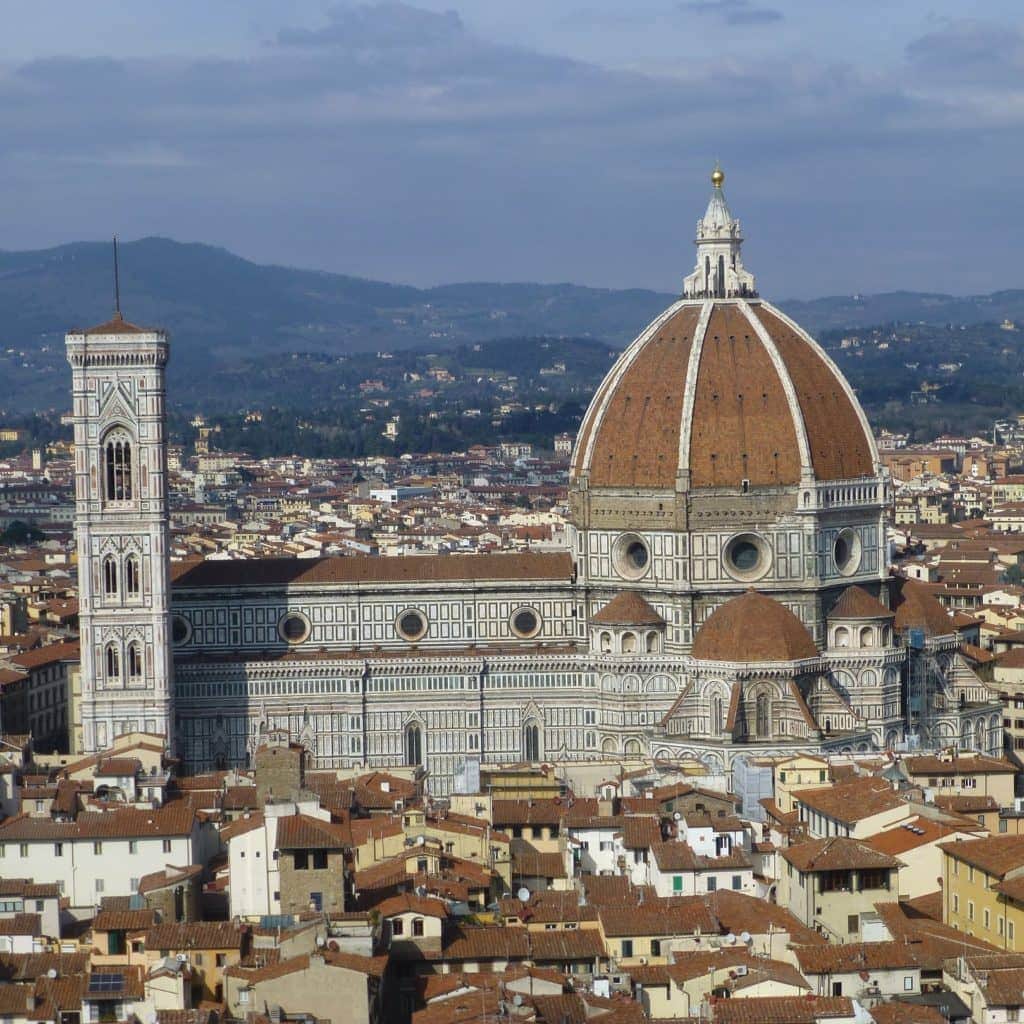
1. The Duomo (Cattedrale di Santa Maria del Fiore) & Brunelleschi’s Dome

You literally cannot miss it. It anchors the city like a giant, pink-and-green marble spaceship that crash-landed in the middle of a medieval grid.

The exterior of Santa Maria del Fiore is a jaw-dropping masterclass in Tuscan Gothic architecture. But the real miracle is the massive red-brick dome sitting on top. Back in the early 1400s, the city built a cathedral so massive that nobody actually knew how to build a dome wide enough to close the roof. It sat open to the rain for decades.

Then came Filippo Brunelleschi. He had no formal architectural training, he was a goldsmith. But he figured out a way to build the largest masonry dome in the world without using wooden scaffolding, using an ingenious herringbone brick pattern that supported itself as it rose. It was a massive middle finger to the laws of physics.

  • The Experience: Walking inside the cathedral is surprisingly sparse and austere compared to the outside. The real magic is climbing the 463 steps to the top of the Dome.

  • The Warning: It is claustrophobic, narrow, steep, and there is no elevator. If you hate tight spaces, skip the climb and admire it from the piazza.

  • Insider Tip: You must book your dome climbing slot weeks, sometimes months, in advance. If you miss out, climb the adjacent Giotto’s Campanile (the bell tower) instead. The views of the city are just as good, and bonus: your photos will actually have the iconic Dome in them.

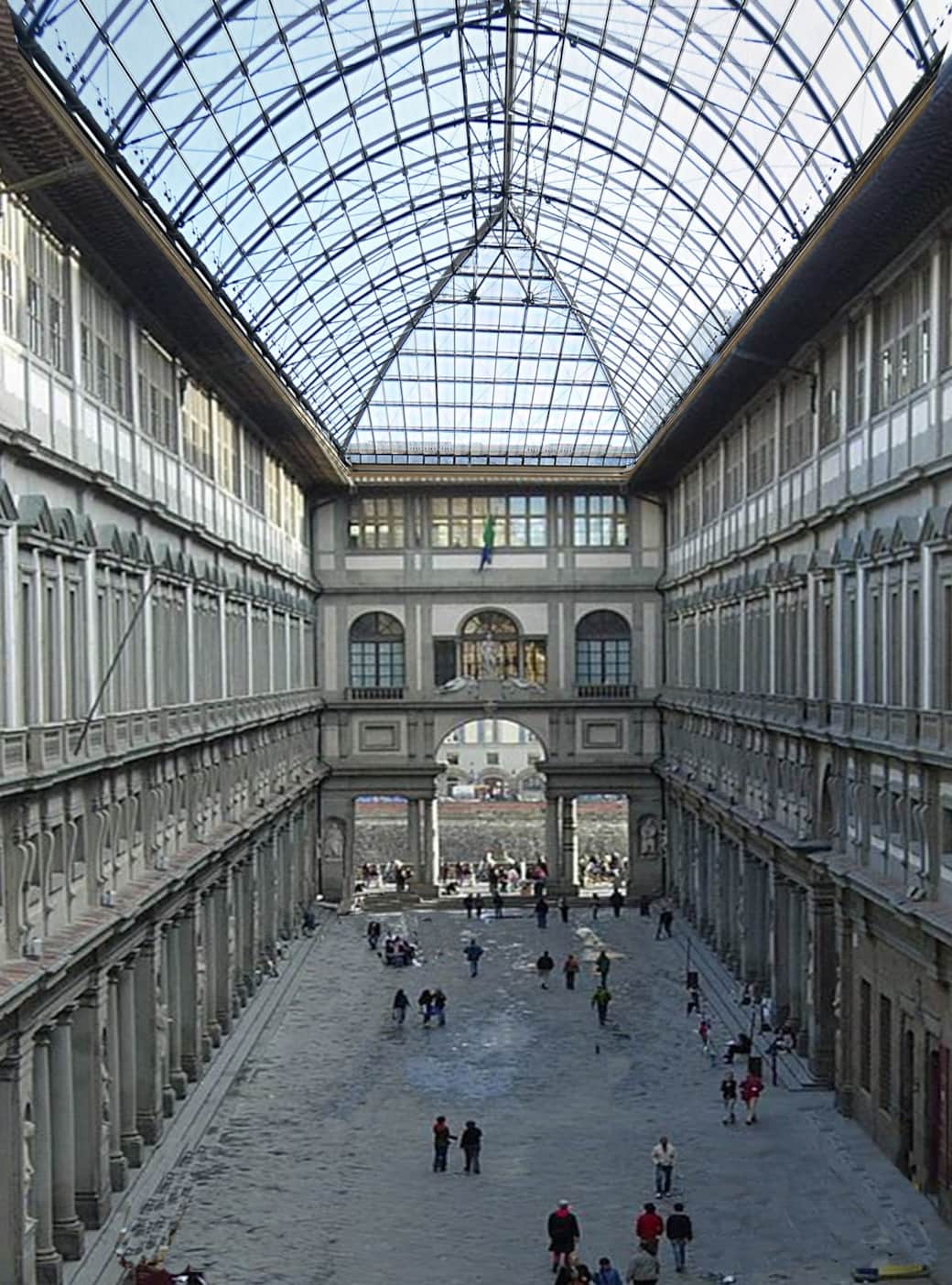
2. The Uffizi Gallery (Galleria degli Uffizi)

If the Louvre is the heavyweight champion of scale, the Uffizi is the undisputed king of concentration. This is the most important collection of Renaissance art on the planet.

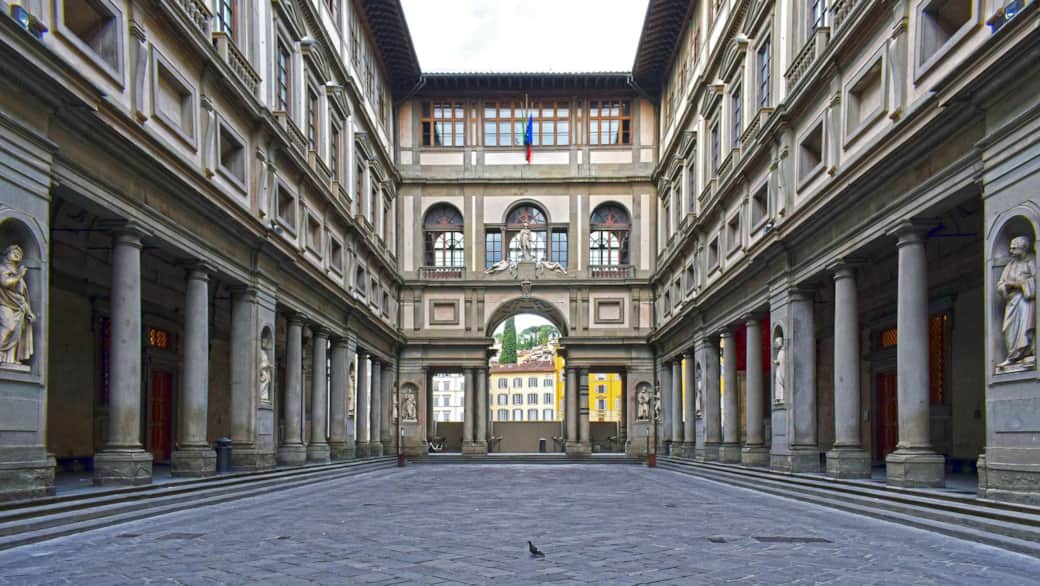
The building itself was originally designed by Giorgio Vasari to hold the uffizi (offices) of the Florentine magistrates and the Medici family. Eventually, the Medici just filled it with their private art collection, which Anna Maria Luisa de' Medici luckily left to the city forever.

Inside, you are walking through the literal evolution of Western art. You start with flat, golden, eerie medieval altarpieces, and within a few rooms, you watch the canvas explode into perspective, depth, anatomy, and human emotion.

  • The Headliners: Sandro Botticelli’s The Birth of Venus and Primavera. Standing in front of Venus floating on her seashell is a genuine bucket-list moment. You’ll also find masterworks by Leonardo da Vinci, Michelangelo, Raphael, Caravaggio, and Titian.

  • Insider Tip: Do not just turn up and line up. You will waste three hours of your life in the ticket line. Buy a timed-entry ticket online well in advance. Once inside, don't try to look at every painting. Pick a few rooms, focus on the giants, and take a coffee break on the rooftop terrace overlooking the Palazzo Vecchio.

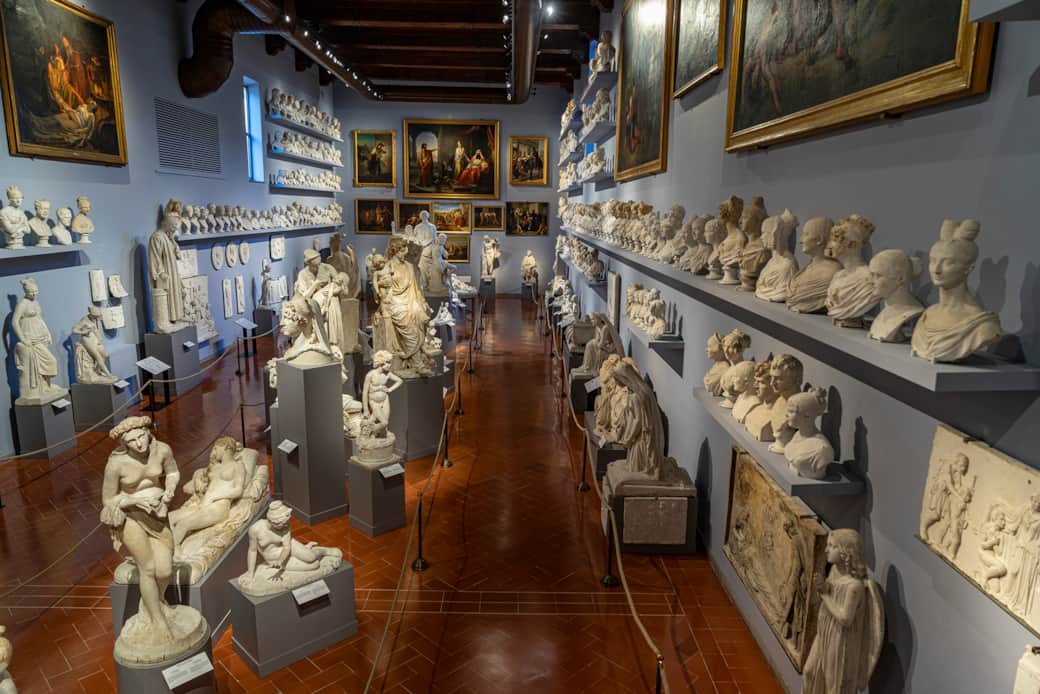
3. Galleria dell’Accademia (Michelangelo’s David)

Let's be brutally honest: most people come to the Accademia for one single object. A 17-foot-tall slab of white Carrara marble.

Michelangelo’s David.

You might think you’ve seen enough replicas, postcards, and aprons with David’s anatomy printed on them to skip the real thing. You are wrong. Seeing the real David in person is an entirely different secular religious experience.

Michelangelo was only 26 years old when he took a giant block of flawed marble that other sculptors had rejected as unusable and spent three years chipping away at it. He didn’t carve David after the battle with Goliath; he carved him before. Look closely at his face: the brow is furrowed, the veins in his right hand are pulsing with adrenaline, and his muscles are tense with anticipation. It feels alive.

  • Beyond the Statue: The hallway leading up to David is lined with Michelangelo’s unfinished sculptures, known as The Slaves or The Prisoners. These figures seem to be violently struggling to break free from the raw stone. In many ways, they are even more fascinating than David because they reveal the artist's raw, unfiltered process.

  • Insider Tip: The Accademia is relatively small, and outside of David and the musical instrument museum inside, it can be toured quickly. Book a late afternoon slot (around 5:00 PM) when the tour buses have cleared out.

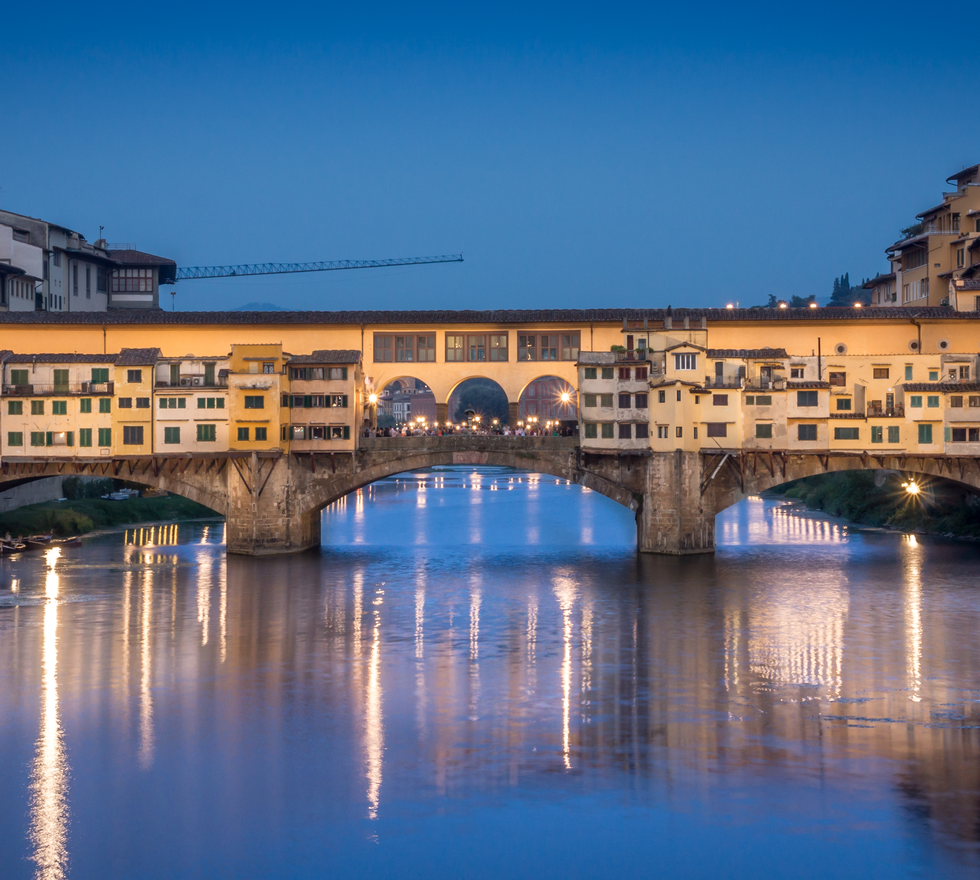
4. Ponte Vecchio

The "Old Bridge" is the only bridge across the Arno River that the retreating German army didn't blow up during World War II. Apparently, Hitler gave specific orders to spare it because he thought it was too beautiful to destroy.

In the medieval era, the shops lining the bridge belonged to butchers, fishmongers, and tanners. They threw all their waste directly into the river, creating a horrific stench. When the Medici built their secret elevated walkway (the Vasari Corridor) over the bridge, the Grand Duke got tired of smelling rotten meat on his walk to work. He evicted the butchers by decree and replaced them with goldsmiths and jewelers.

They are still there today.

  • The Vibe: The bridge looks like a chaotic, colorful toy village jutting out over the water. By day, it’s packed with tourists window-shopping for glittering gold filigree. By night, when the shop shutters close like wooden treasure chests, street musicians take over, and the atmosphere becomes incredibly romantic.

  • Insider Tip: The best view of the Ponte Vecchio isn’t from the bridge itself, it’s from the neighboring Ponte Santa Trinita. Head there at sunset for the perfect postcard photo without the crushing crowds.

5. Piazza della Signoria & Palazzo Vecchio

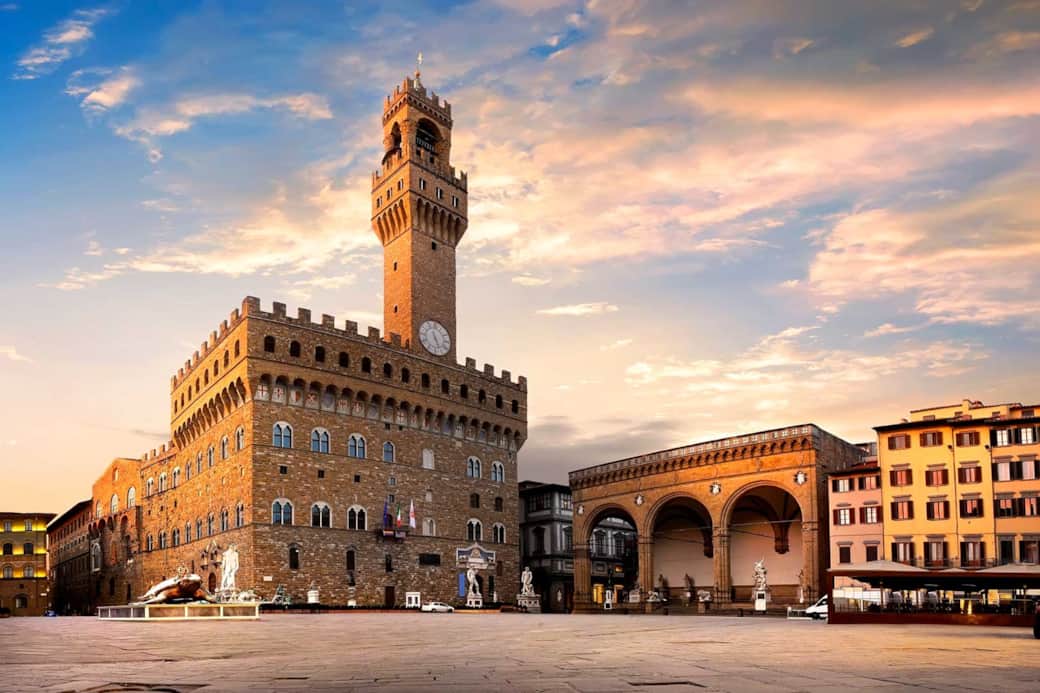
This is the political soul of Florence. While the Duomo square was for God, Piazza della Signoria was for men, power, and conflict.

Dominating the square is the Palazzo Vecchio, the fortress-like town hall that looks like a giant medieval castle with a towering clock tower. Outside its doors sits an open-air sculpture museum called the Loggia dei Lanzi. You don't need a ticket to walk under this stone canopy and stand inches away from Cellini’s terrifying bronze Perseus Holding the Head of Medusa or Giambologna’s fluid Rape of the Sabine Women.

  • The Real vs. Fake: Right outside the entrance of Palazzo Vecchio, you’ll see a statue of David. This is a replica marking the exact spot where the original stood for centuries before being moved to the Accademia to protect it from the elements.

  • Insider Tip: Go inside the courtyard of Palazzo Vecchio. It’s free to enter, and the walls are covered in stunning, intricate golden frescoes and Austrian-inspired carvings built to welcome a Medici bride.

6. Piazzale Michelangelo

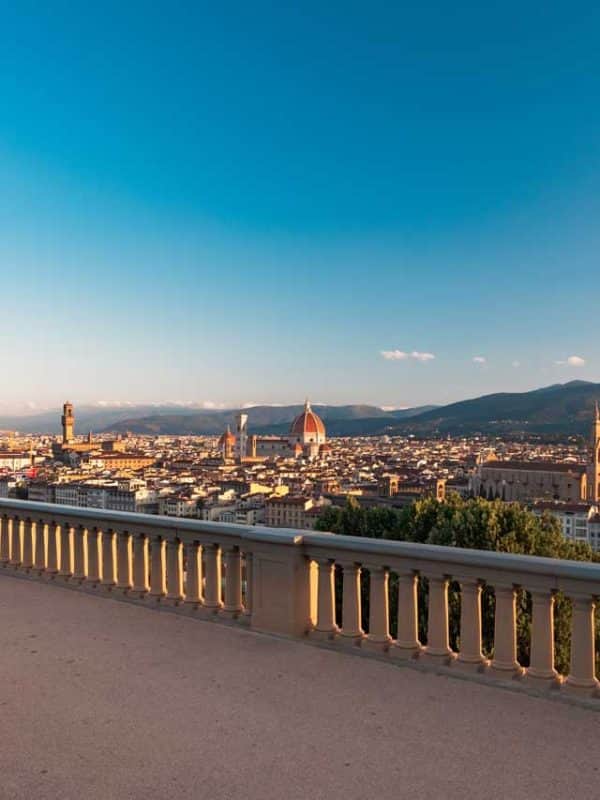
If you’ve seen a panoramic photo of Florence with the Duomo perfectly centered against a backdrop of rolling Tuscan hills, it was taken from here.

Located across the river on a high hill in the Oltrarno district, Piazzale Michelangelo is the ultimate panoramic terrace of the city. It’s dedicated to the Renaissance master, complete with yet another bronze replica of David in the center.

  • The Ritual: An hour before sunset, hundreds of people gather on the massive stone steps of the piazza. They bring bottles of wine, plastic cups, and panini. As the sun dips below the horizon, painting the Arno River and the city's red roofs in shades of gold, orange, and purple, a collective hush falls over the crowd. It’s a collective travel ritual that never gets old.

  • How to Get There: You can take a bus (Line 12 or 13), but the best way is to walk. Cross the river and take the winding, tree-lined paths up from Piazza Poggi. It’s a steep climb, but it burns off the pasta.

7. Basilica di Santa Croce

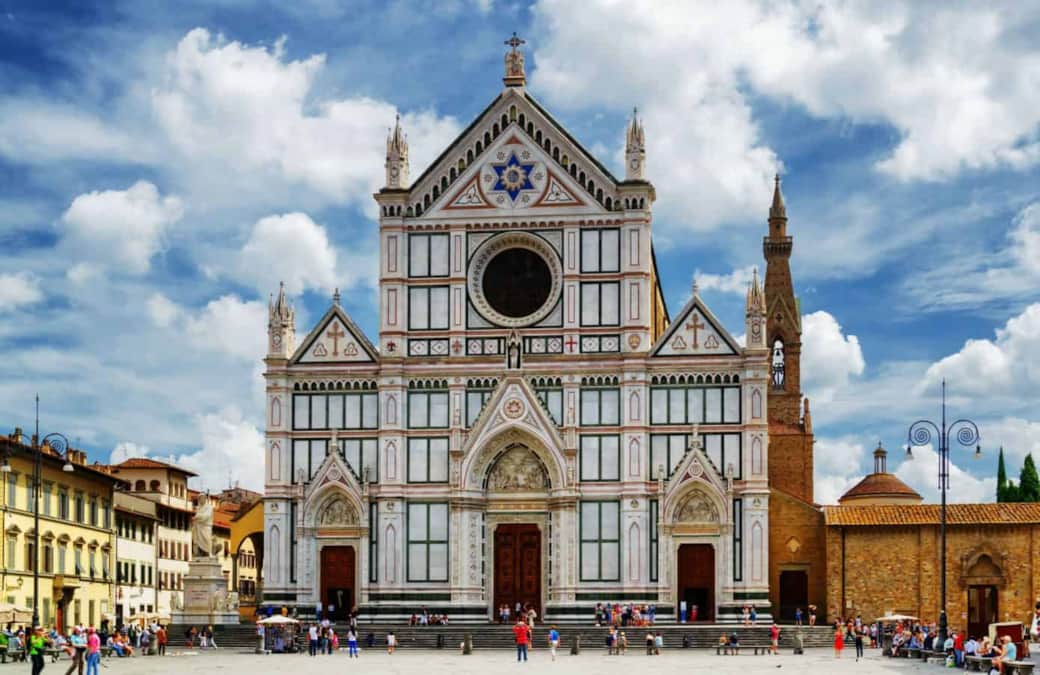
Think of Santa Croce as the Italian Pantheon. This Franciscan basilica is the final resting place of the greatest minds, artists, and scientists the country ever produced.

Walking down the aisles, you are literally stepping over and next to history. The tombs are a roll call of genius:

  • Michelangelo (his tomb features weeping statues representing Painting, Sculpture, and Architecture).

  • Galileo Galilei (who was denied a Christian burial for decades because his scientific theories angered the Church).

  • Niccolò Machiavelli (the cynical father of modern political science).

  • Gioachino Rossini (the composer of the William Tell Overture).

There is also a massive monument to Dante Alighieri, though the tomb is empty. Florence exiled him during his lifetime, he died in Ravenna, and Ravenna stubbornly refuses to give his bones back.

  • The Art: Aside from the tombs, the church is packed with frescoes by Giotto, the artist who basically taught the pre-Renaissance world how to paint human emotion.

  • Insider Tip: Tucked into the back of the cloister is the Pazzi Chapel, designed by Brunelleschi. It is an architectural masterpiece of geometry, symmetry, and calm gray-and-white stone. It’s the perfect place to sit quietly and escape the city's frantic energy.

8. Pitti Palace & Boboli Gardens (Palazzo Pitti)

When the Medici family outgrew their neighborhood palace, they crossed the river and bought the Pitti Palace, a monstrously huge stone estate originally started by a rival banker named Luca Pitti (who went bankrupt trying to build a house bigger than the Medici’s).

The Medici expanded it until it became the Italian version of Versailles. Inside, the Palatine Gallery holds an incredible collection of high-Renaissance art (including the world's largest collection of paintings by Raphael), hung in the traditional "cluttered" style of a royal apartment, frames touching frames under gilded ceilings.

Behind the palace lies the Boboli Gardens.

  • The Gardens: This isn't a park for a casual picnic; it’s a formal, monumental green space filled with hidden fountains, stone amphitheaters, eerie grottos, and gravel pathways lined with ancient statues. It set the blueprint for royal gardens across Europe for centuries.

  • Insider Tip: Walk all the way to the top of the gardens to the Kaffeehaus or the Knight’s Garden. The crowds vanish up here, and you get spectacular views of the Tuscan countryside rolling away on the opposite side of the city.

9. San Lorenzo & The Medici Chapels

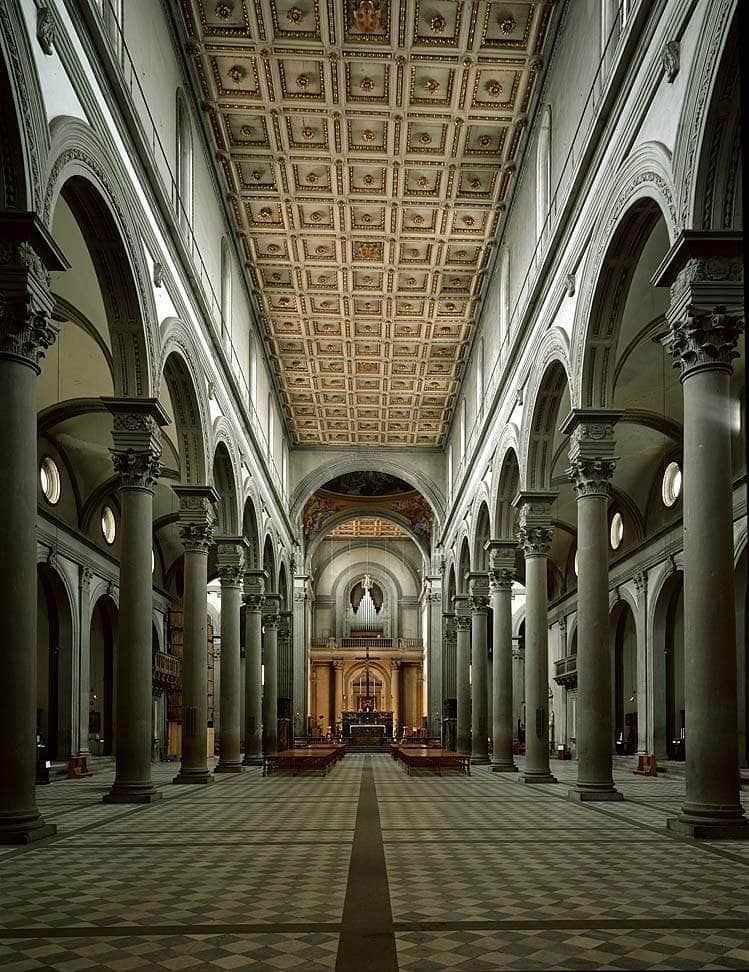
The Basilica of San Lorenzo was the official parish church of the Medici family. While the exterior looks like an unfinished, rough brick barn (Michelangelo designed a marble facade for it, but the Pope ran out of money to build it), the treasure is hidden around the back.

The Medici Chapels are the monumental mausoleum of the dynasty.

The main room, the Cappella dei Principi (Chapel of the Princes), is an oppressive, jaw-dropping octagon of dark, polished semi-precious stones, jasper, and mother-of-pearl. It screams "we had more money than God."

But the real artistic highlight is the New Sacristy, designed entirely by Michelangelo.

  • The Masterpiece: Michelangelo sculpted the tombs for two of the lesser-known Medici dukes, flanking them with allegorical statues that are world-famous: Dawn and Dusk, and Night and Day. The smooth, hauntingly beautiful figures represent the heavy, relentless passage of time.

  • Insider Tip: Look closely at the walls of the sacristy. For centuries, charcoal sketches were hidden in a secret room beneath the chapel. They were recently opened to the public in limited numbers, these are drawings Michelangelo did directly on the plaster while hiding from a vengeful Pope in 1530.

10. Basilica di Santa Maria Novella

If you arrive in Florence by train, this is the first major sight you’ll see. Sadly, many tourists skip the church itself because they are rushing toward the Duomo. That is a massive mistake.

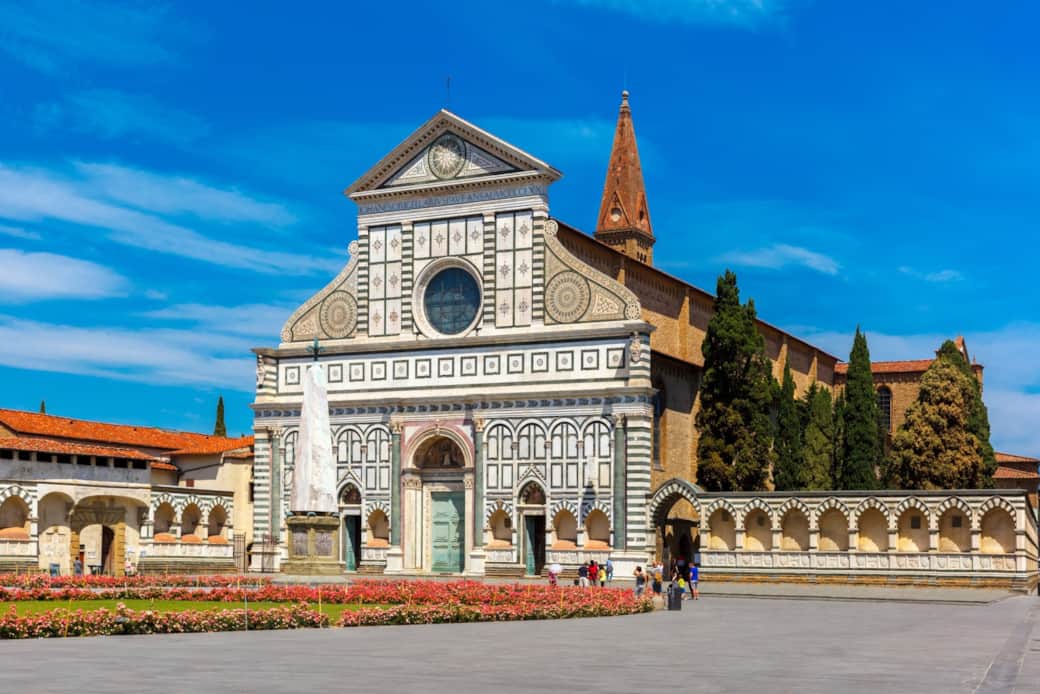
The facade of Santa Maria Novella, completed by the brilliant polymath Leon Battista Alberti in 1470, is a perfect mathematical grid of dark green and white marble. It’s widely considered one of the most beautiful and harmonious church fronts in Italy.

Inside, the church is a treasure chest of Dominican art.

  • The Highlights: It holds Masaccio’s Holy Trinity, a fresco that completely revolutionized the art world because it used linear mathematical perspective correctly for the first time in history. When it was painted, viewers allegedly gasped because the illusion of a recessed stone archway looked like a real hole in the church wall. You’ll also find a hanging wooden crucifix by Giotto and a stunning wood-carved crucifix by Brunelleschi.

  • Bonus Visit: Just outside the church is the Officina Profumo-Farmaceutica di Santa Maria Novella. Established by Dominican monks in 1221, it is the oldest working pharmacy in the world. Even if you don't buy their luxury perfumes or historic herbal remedies, go inside just to look at the vaulted ceilings and smell the centuries-old recipes of rosewater and citrus.

The Florence Survival Guide: 3 Golden Rules

To wrap up your itinerary, keep these three non-negotiable rules in mind to ensure your trip is memorable for the right reasons:

  • Rule 1: Pre-Book Everything. We cannot emphasize this enough. If you want to see the Uffizi, Accademia, and climb the Duomo, buy your tickets online at least a month before your plane leaves the tarmac. If you don't, you will spend your vacation standing in lines under the baking Tuscan sun.

  • Rule 2: Dress Code is Real. These attractions are living, active places of worship. Security guards at the Duomo, Santa Croce, and Santa Maria Novella will deny you entry if your shoulders and knees are exposed. Pack a light scarf or shawl in your daypack to cover up before entering.

  • Rule 3: Get Lost in the Oltrarno. When the crowds in the historic center become too much, cross any of the bridges to the Oltrarno (the "other side" of the Arno). This is where the real Florentines live, work, and drink. It’s a neighborhood of artisan workshops, leather carvers, antique dealers, and quiet piazze where you can breathe, sip an espresso, and digest the incredible amount of beauty you just witnessed.

©2026 The Florence Royal Suite All rights reserved - Powered byLodgify